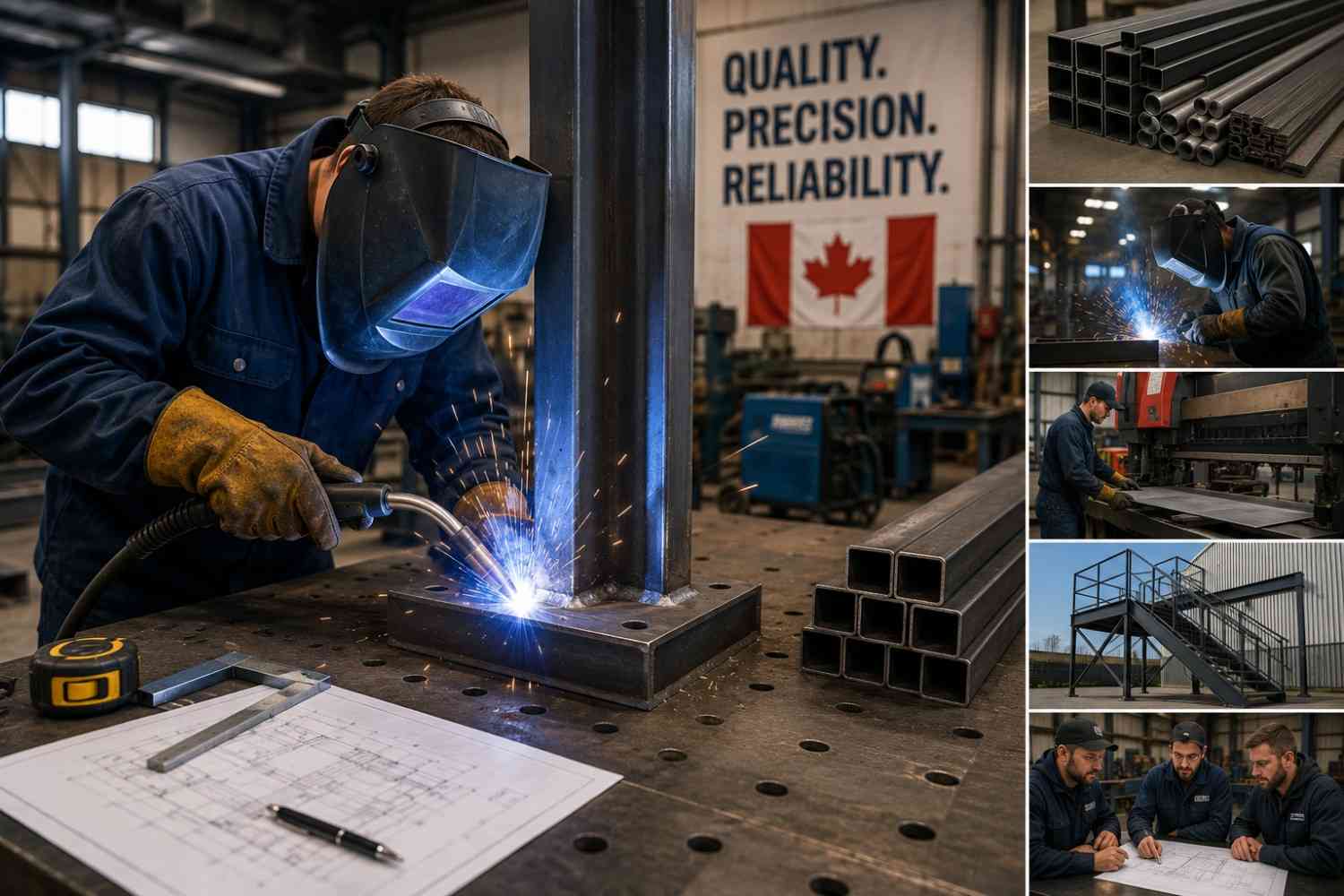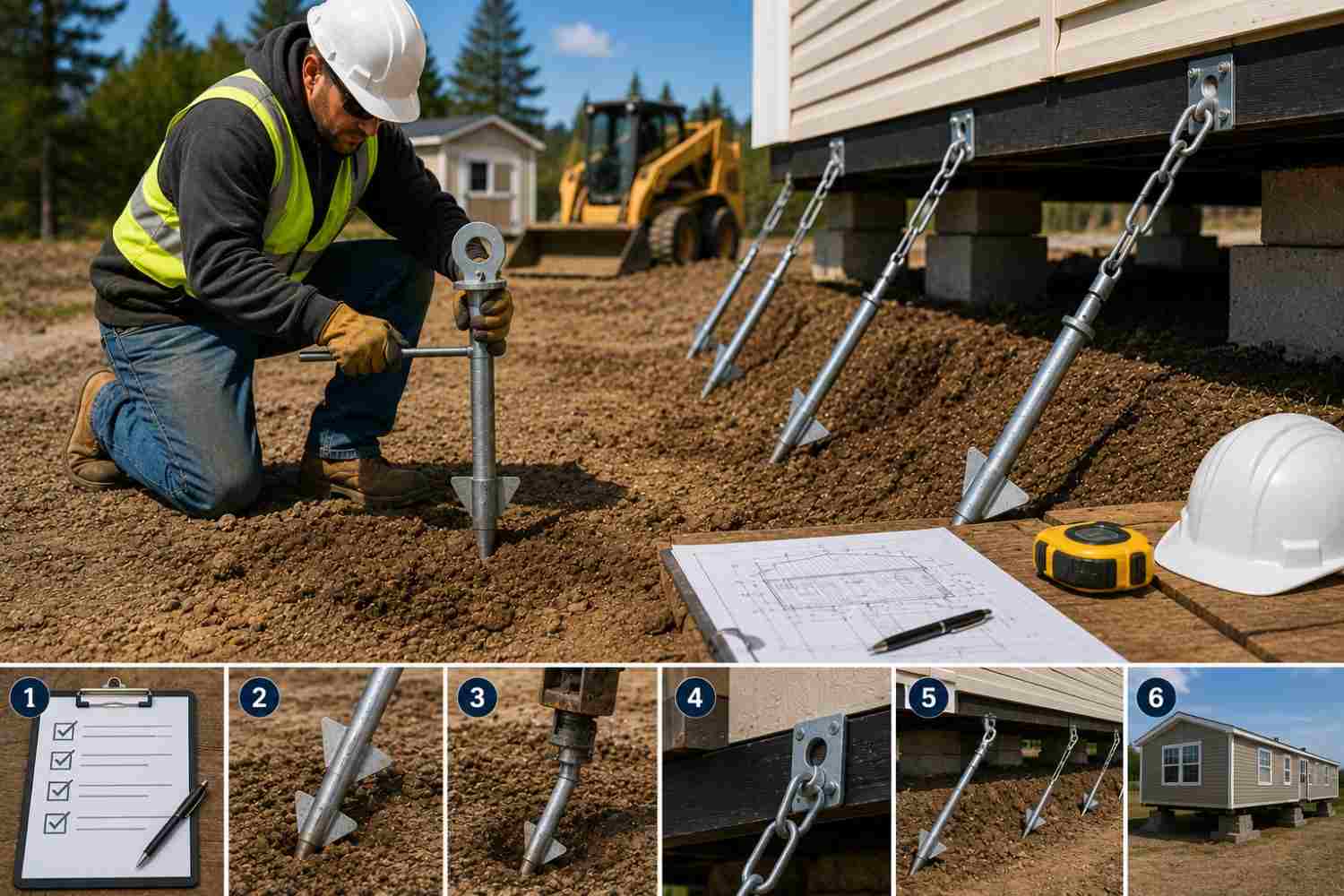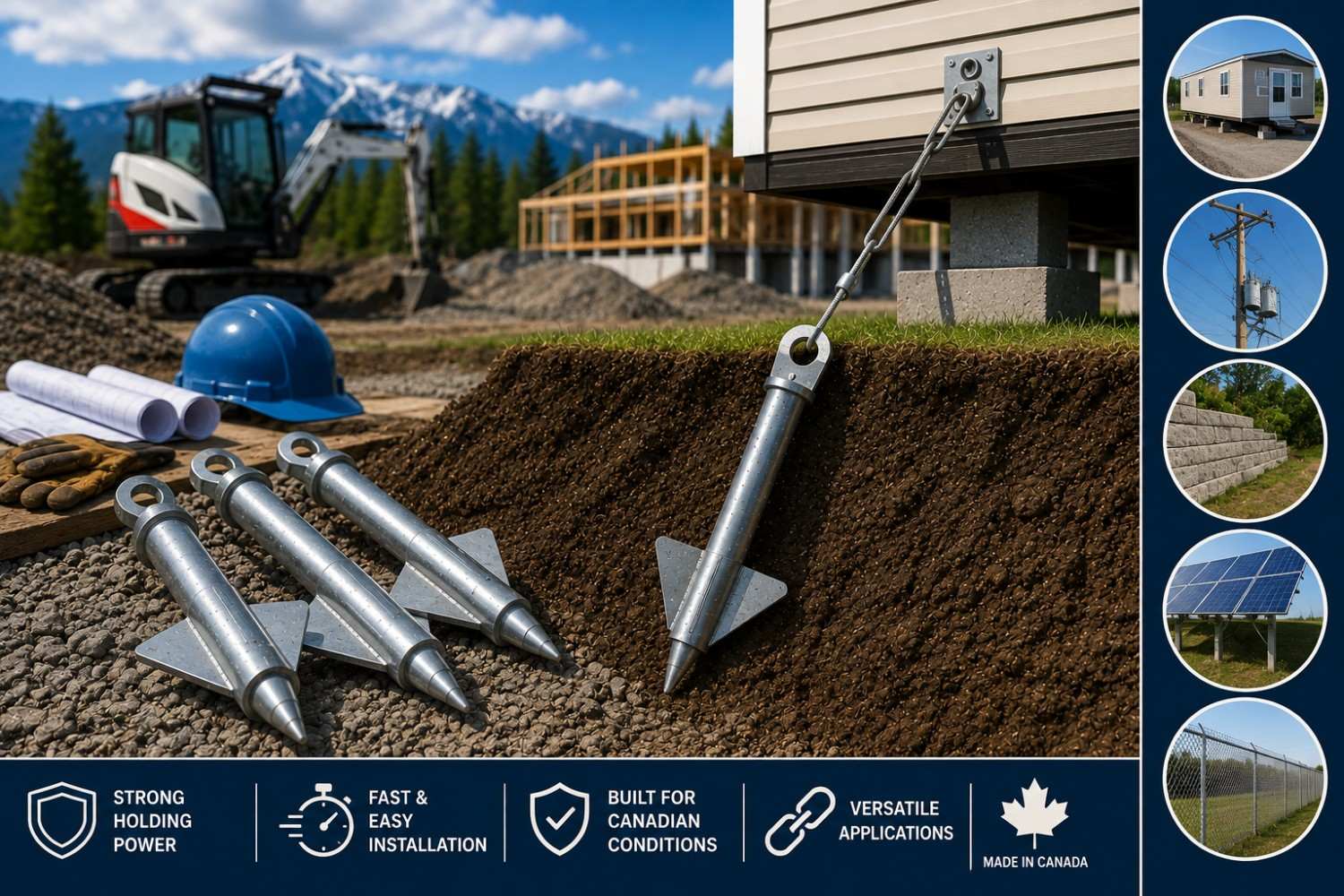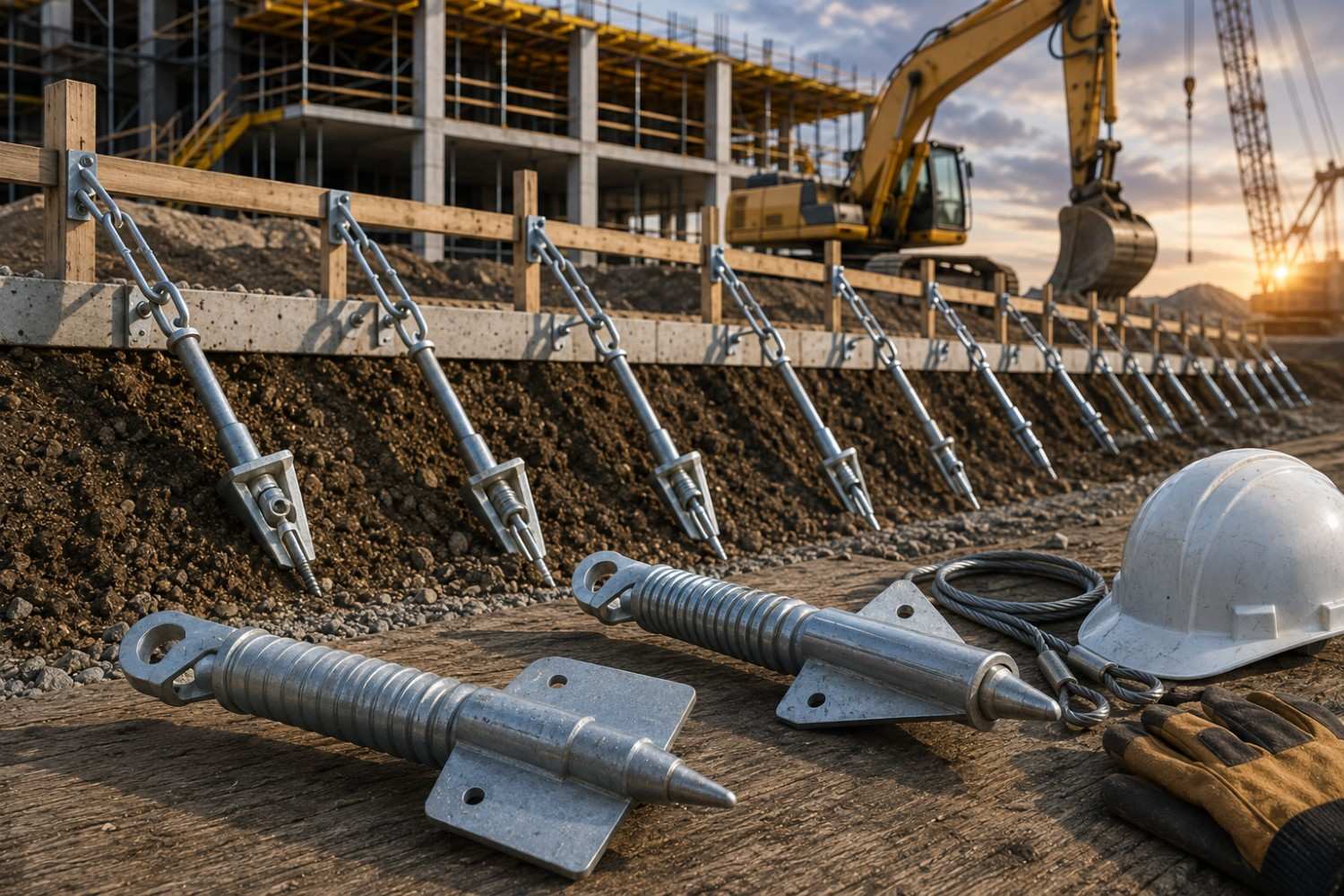
How to Choose the Best Earth Anchor System for Construction Projects in Canada

How do I choose the best earth anchor system

How to Choose the Best Earth Anchor System for Construction Projects in Canada

Every successful construction project begins with a strong foundation, but the stability of many structures depends just as much on the anchoring system below the surface. Whether you’re securing modular buildings, retaining walls, utility infrastructure, or temporary structures, selecting the right earth anchor system is essential for ensuring safety, durability, and long-term structural performance. Choosing the wrong anchor can lead to movement, costly repairs, and project delays, while the right solution provides dependable holding strength in varying soil and environmental conditions.

At B & R Stamping, we manufacture high-quality Earth Anchor Systems designed to meet the demands of residential, commercial, industrial, and infrastructure projects across Canada. Understanding the factors that influence anchor performance can help contractors, engineers, and project managers make informed decisions that improve project efficiency and reliability.

Understand Your Project Requirements

Before selecting an earth anchor system, it’s important to evaluate the specific needs of your project. Every construction application has different structural demands, and the anchor must be capable of handling the expected forces throughout the life of the structure.

Consider factors such as the overall weight of the structure, anticipated wind uplift, lateral loads, expected lifespan, and whether the installation is temporary or permanent. These details help determine the appropriate anchor type and load capacity while reducing the risk of future structural movement.

Evaluate Soil Conditions Carefully

Soil conditions play one of the most significant roles in determining how well an earth anchor performs. The same anchor may deliver different holding capacities depending on the type and density of the soil where it is installed.

Dense clay soils generally provide excellent holding strength because of their compact nature, while sandy soils often require deeper installation to achieve similar performance. Gravel and rocky soils may offer high resistance but sometimes require specialized installation methods. For sites with mixed or soft soils, professional soil testing is highly recommended before selecting an anchor system. A proper soil assessment ensures that the anchor will deliver reliable performance under expected loading conditions.

Select the Right Type of Earth Anchor

Not every construction project requires the same anchoring solution. Different anchor designs are engineered to perform in specific applications, making it important to choose a system that aligns with your project requirements.

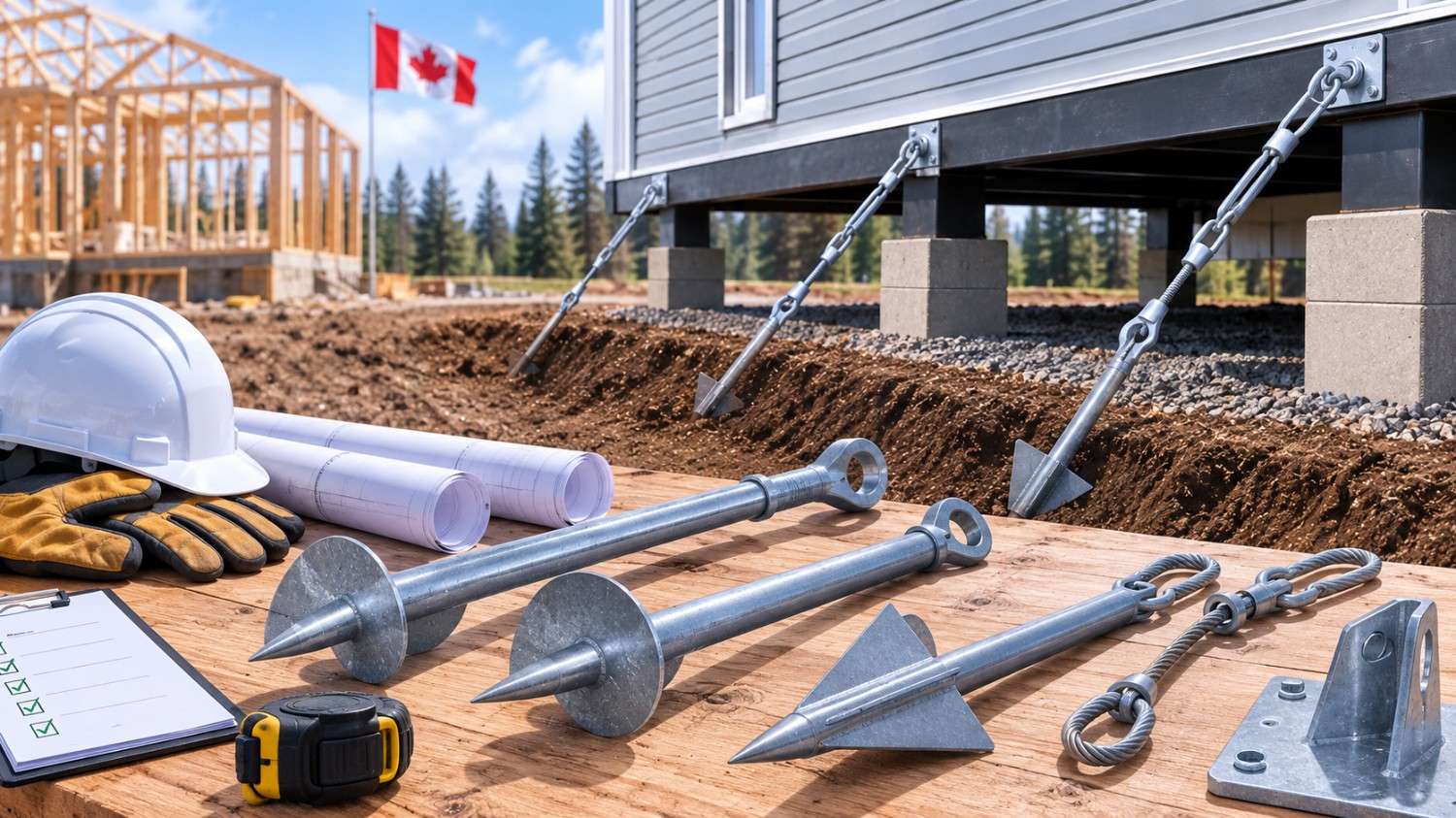
For larger commercial and infrastructure projects, heavy-duty Load Lock Anchors provide excellent holding capacity and are commonly used where maximum structural stability is required. Arrowhead Anchors, on the other hand, are well suited for portable buildings, manufactured homes, temporary structures, and lighter commercial applications. Selecting the correct anchor type helps improve installation efficiency while ensuring dependable long-term performance.

Determine the Required Load Capacity

One of the most common mistakes made during anchor selection is choosing a product based solely on its size rather than its engineered load capacity. Every project should include proper load calculations that account for structural weight, wind forces, environmental conditions, and applicable safety factors.

By accurately determining the required holding strength before installation, contractors can reduce the likelihood of anchor failure and improve overall project safety. An appropriately sized anchor also minimizes unnecessary costs while ensuring the structure remains secure under changing environmental conditions.

Consider Canada’s Environmental Conditions

Construction projects throughout Canada face unique environmental challenges that can affect anchor performance over time. Seasonal freeze-thaw cycles, heavy snowfall, moisture, strong winds, and soil erosion all place additional stress on anchoring systems.

Choosing corrosion-resistant or galvanized earth anchors helps extend product life and maintain structural integrity, particularly in regions exposed to high moisture levels or harsh weather. Investing in quality materials from the beginning often reduces long-term maintenance and replacement costs.

Focus on Installation Efficiency

An effective earth anchor system should not only provide exceptional holding strength but also simplify the installation process. Faster installation helps reduce labour costs, minimizes equipment time, and keeps projects on schedule.

Modern earth anchor systems are designed for efficient installation using standard equipment while requiring minimal excavation compared to traditional concrete foundations. This makes them an excellent solution for projects where speed and cost efficiency are priorities without compromising structural performance.

Choose a Trusted Manufacturer

The quality of an earth anchor system depends not only on its design but also on the expertise of the manufacturer behind it. Working with an experienced manufacturer ensures consistent product quality, dependable engineering, and access to technical guidance throughout the project.

At B & R Stamping, our anchoring solutions are manufactured using high-strength steel and strict quality control processes to meet the demands of Canadian construction projects. Our team works closely with contractors and engineers to recommend solutions that match project requirements and site conditions.

Common Applications of Earth Anchor Systems

Earth anchor systems have become an essential component across numerous industries because of their versatility and dependable performance. They are commonly used for commercial construction, retaining walls, modular buildings, manufactured housing, utility infrastructure, communication towers, solar installations, highway projects, and various ground stabilization applications.

Their ability to provide strong holding power without requiring extensive concrete work makes them a practical solution for both permanent and temporary structures.

Avoid Common Selection Mistakes

Many anchoring problems can be avoided through proper planning and product selection. Some of the most common mistakes include selecting anchors without evaluating soil conditions, underestimating structural loads, installing anchors at incorrect depths, or choosing products based solely on price instead of engineering performance.

Working with experienced manufacturers and following proper installation recommendations helps reduce these risks while improving the long-term reliability of the entire structure.

Why Choose B & R Stamping?

B & R Stamping has built a strong reputation for manufacturing reliable earth anchoring solutions that meet the demands of modern construction projects across Canada. Our products are engineered for strength, durability, and consistent performance in challenging environments.

Whether your project requires Load Lock Anchors, Arrowhead Anchors, or complete Earth Anchor Systems, our team is committed to providing dependable solutions backed by industry expertise and exceptional product quality.

Conclusion

Choosing the best earth anchor system is about much more than selecting a product from a catalogue. It requires careful consideration of soil conditions, structural loads, environmental challenges, installation methods, and long-term performance expectations.

By partnering with an experienced manufacturer like B & R Stamping, contractors and engineers can confidently select anchoring solutions that improve project safety, reduce maintenance costs, and deliver dependable performance for years to come. Investing in the right earth anchor system today helps create stronger, more secure construction projects throughout Canada.

Frequently Asked Questions?

An earth anchor system is a below-ground anchoring solution that transfers structural loads into the surrounding soil to prevent movement, uplift, or instability.

The right system depends on several factors, including soil type, load requirements, environmental conditions, project type, and installation method.

Soil testing helps determine the holding capacity of the ground, allowing engineers and contractors to select the most appropriate anchor type and installation depth.

Yes. High-quality galvanized earth anchor systems are designed to withstand Canada’s freeze-thaw cycles, moisture, wind, and other challenging environmental conditions.

Earth anchors are widely used for retaining walls, modular buildings, utility installations, communication towers, solar projects, manufactured homes, and commercial construction.

Earth anchor systems provide strong holding power, faster installation, reduced excavation, lower labour costs, and long-term structural stability compared to many traditional foundation methods.

Understanding the Anchoring Principle: How Ground Anchors Hold Loads

Understanding the Anchoring Principle

Understanding the Anchoring Principle: How Ground Anchors Hold Loads

Ground anchors are one of the most effective solutions for securing structures and transferring forces safely into the ground. They are used in applications such as retaining walls, mobile homes, utility installations, foundations, slopes, and structural stabilization projects.

But how do ground anchors actually hold loads?

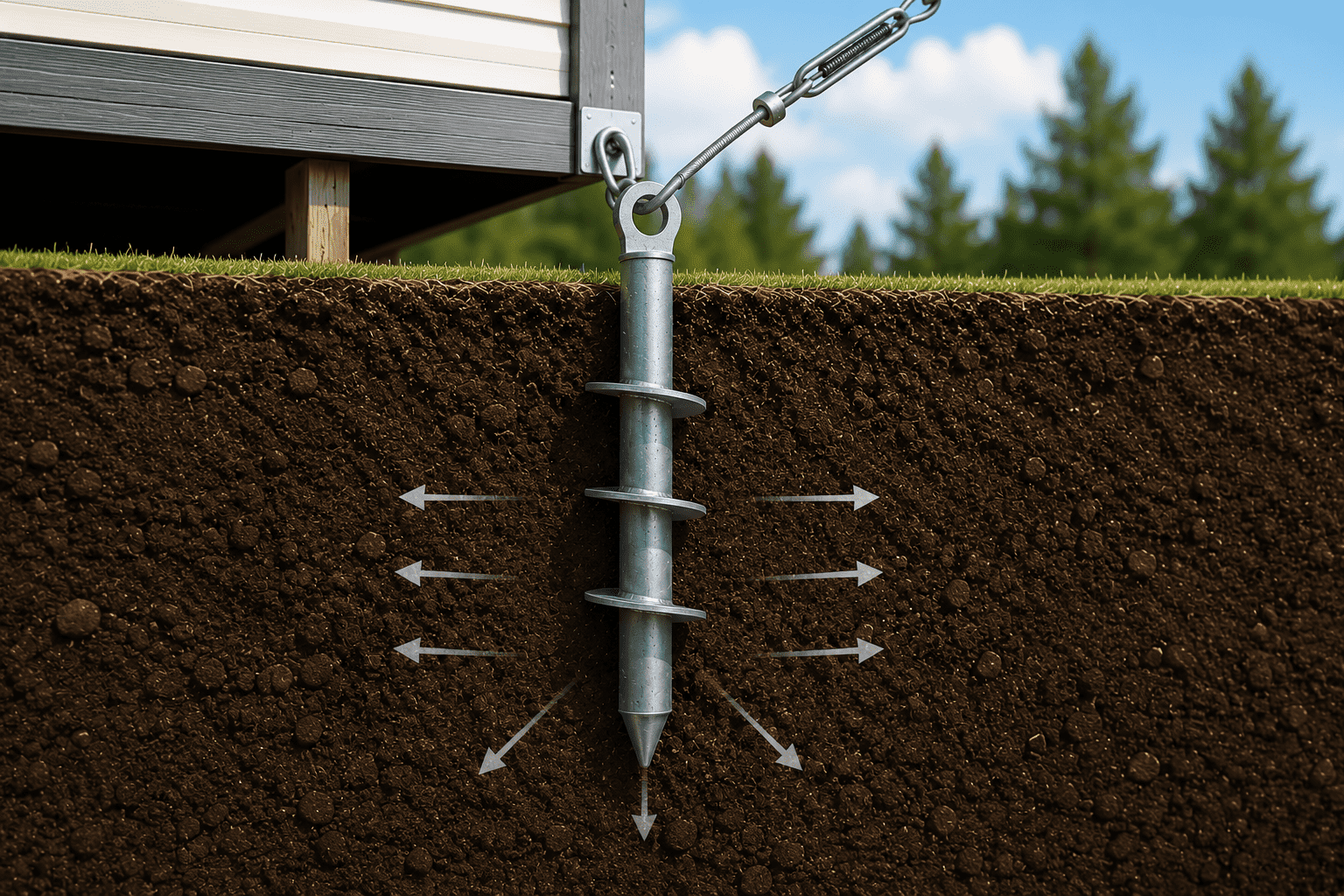
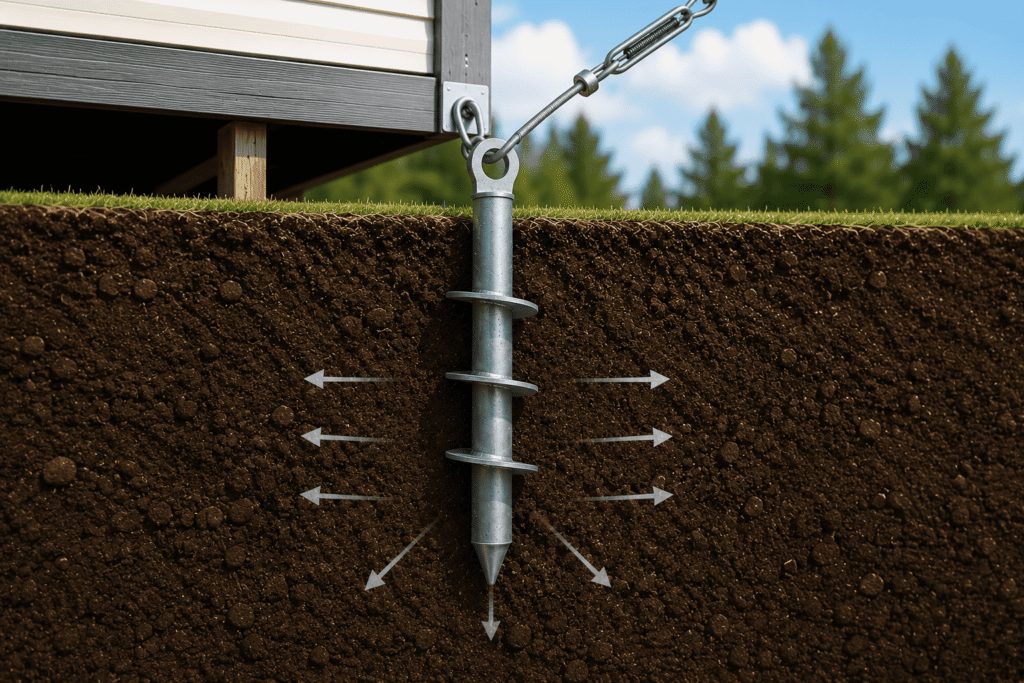
The answer lies in the anchoring principle — the process of transferring external forces from a structure into the surrounding soil or rock through a secure underground connection.

At B & R Stamping, we manufacture Earth Anchors, Load Lock Anchors, Arrowhead Anchors, and Ground Anchoring Systems designed to provide reliable holding strength in various Canadian soil conditions.

What Is the Anchoring Principle?

The anchoring principle is based on one simple concept:

A ground anchor resists movement by transferring applied loads into the surrounding soil or rock.

When a force pulls on an anchored structure, the anchor does not rely only on its own strength. Instead, it uses the surrounding ground to create resistance.

The holding capacity depends on:

  • Soil strength
  • Anchor design
  • Installation depth
  • Soil density
  • Ground conditions
  • Load direction

The stronger and more stable the surrounding soil, the greater the anchor’s ability to resist movement.

How Do Ground Anchors Hold Loads?

Ground anchors hold loads through several important mechanisms:

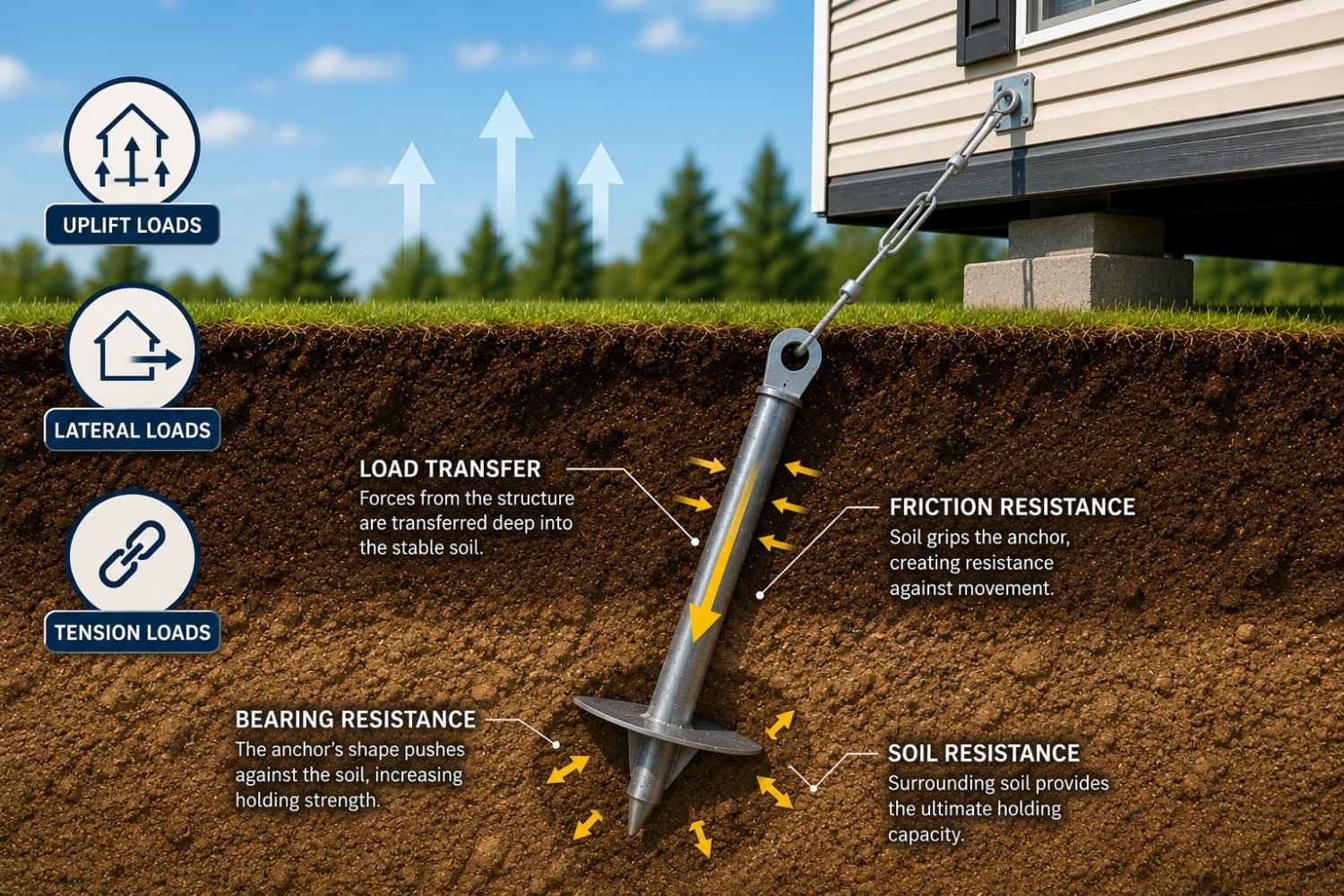
1. Soil Resistance

When an anchor is installed underground, the surrounding soil pushes back against movement.

This creates resistance against:

  • Pulling forces
  • Wind uplift
  • Structural movement
  • Sliding forces

Dense soils typically provide higher holding capacity compared to loose soils.

2. Load Transfer

The anchor transfers forces from the structure into deeper soil layers.

For example:

A mobile home experiencing wind uplift creates upward force. The anchor transfers that force into the ground, where the surrounding soil provides resistance.

This prevents the structure from shifting or lifting.

3. Friction and Bearing Resistance

Ground anchors rely on two main resistance methods:

Friction Resistance

The soil grips the anchor surface and prevents movement.

Bearing Resistance

The anchor shape pushes against the soil, creating additional holding strength.

Many anchor designs, including Load Lock Anchors and Arrowhead Anchors, are engineered to maximize these resistance forces.

Factors That Affect Ground Anchor Holding Capacity

Soil Type

Different soils provide different levels of resistance.

Clay Soil

Dense clay can provide excellent holding strength because it creates strong resistance around the anchor.

Sandy Soil

Sand may require deeper installation because particles provide less bonding strength.

Gravel Soil

Compacted gravel can offer strong support but may create installation challenges.

Soft Soil

Soft soils may require larger anchors, deeper installation, or additional anchoring points.

Anchor Design

The shape and structure of an anchor directly affect performance.

Examples:

Helical Earth Anchors

Use spiral plates to create strong resistance in soil.

Arrowhead Anchors

Use an arrow-shaped design to penetrate and lock into the ground.

Load Lock Anchors

Designed for high holding capacity applications where secure load transfer is required.

Installation Depth

Deeper installation generally allows the anchor to engage stronger and more stable soil layers.

Proper installation depth helps:

  • Increase holding strength
  • Improve stability
  • Reduce movement
  • Extend service life

Understanding Anchor Load Types

Ground anchors commonly resist different forces:

Uplift Loads

These forces try to pull a structure upward.

Examples:

  • Wind forces on mobile homes
  • Pole movement
  • Temporary structures

Lateral Loads

These forces push structures sideways.

Examples:

  • Retaining walls
  • Slope stabilization systems

Tension Loads

These are pulling forces applied directly to the anchor.

Proper anchor design ensures these loads are safely transferred into the ground.

Applications of Ground Anchoring Systems

Ground anchors are used in many industries, including:

Mobile Home Anchoring

Provides protection against wind uplift and movement.

Retaining Wall Stabilization

Helps secure walls and prevent soil movement.

Utility Installations

Supports poles, equipment, and infrastructure components.

Construction Projects

Provides temporary and permanent stabilization solutions.

Ground Stabilization

Helps improve safety in slopes, embankments, and unstable areas.

How Soil Testing Improves Anchor Performance

Before selecting a ground anchor system, soil evaluation helps determine:

  • Soil density
  • Ground resistance
  • Moisture conditions
  • Installation requirements
  • Expected holding capacity

A torque probe or similar testing method can help measure soil resistance and identify the right anchoring solution.

Why Proper Anchor Selection Matters

Choosing the wrong anchor type can reduce performance and create safety risks.

The correct selection depends on:

  • Project requirements
  • Soil conditions
  • Load requirements
  • Environmental factors

At B & R Stamping, our Ground Anchoring Systems are designed to provide reliable performance for different applications and soil conditions across Canada.

Conclusion

The anchoring principle behind ground anchors is based on transferring loads from a structure into the surrounding soil or rock. Through soil resistance, friction, bearing forces, and proper installation, anchors create a stable connection that helps prevent movement.

Whether securing a mobile home, stabilizing a retaining wall, or supporting infrastructure, understanding how ground anchors hold loads is essential for choosing the right anchoring solution.

Frequently Asked Questions?

Ground anchors hold loads by transferring forces from a structure into the surrounding soil or rock, where resistance prevents movement.

Holding capacity depends on soil type, anchor design, installation depth, and ground conditions.

Deeper installation can improve holding capacity because anchors can engage stronger soil layers.

Ground anchors can be used in many soil conditions, but anchor type and installation methods must match the soil characteristics.

Earth anchors and ground anchors both secure structures to the ground, but specific designs and applications may vary depending on load requirements.

Soil testing helps determine the correct anchor type, installation depth, and expected performance before installation.

What Are Arrowhead Anchors and How Are They Used?

What Are Arrowhead Anchors

What Are Arrowhead Anchors and How Are They Used?

Arrowhead Anchors are specialized ground anchoring solutions designed to provide strong and reliable holding power in soil conditions where stability and secure installation are required. Their unique arrow-shaped design allows them to penetrate the ground effectively and create resistance against pulling forces, uplift, and movement.

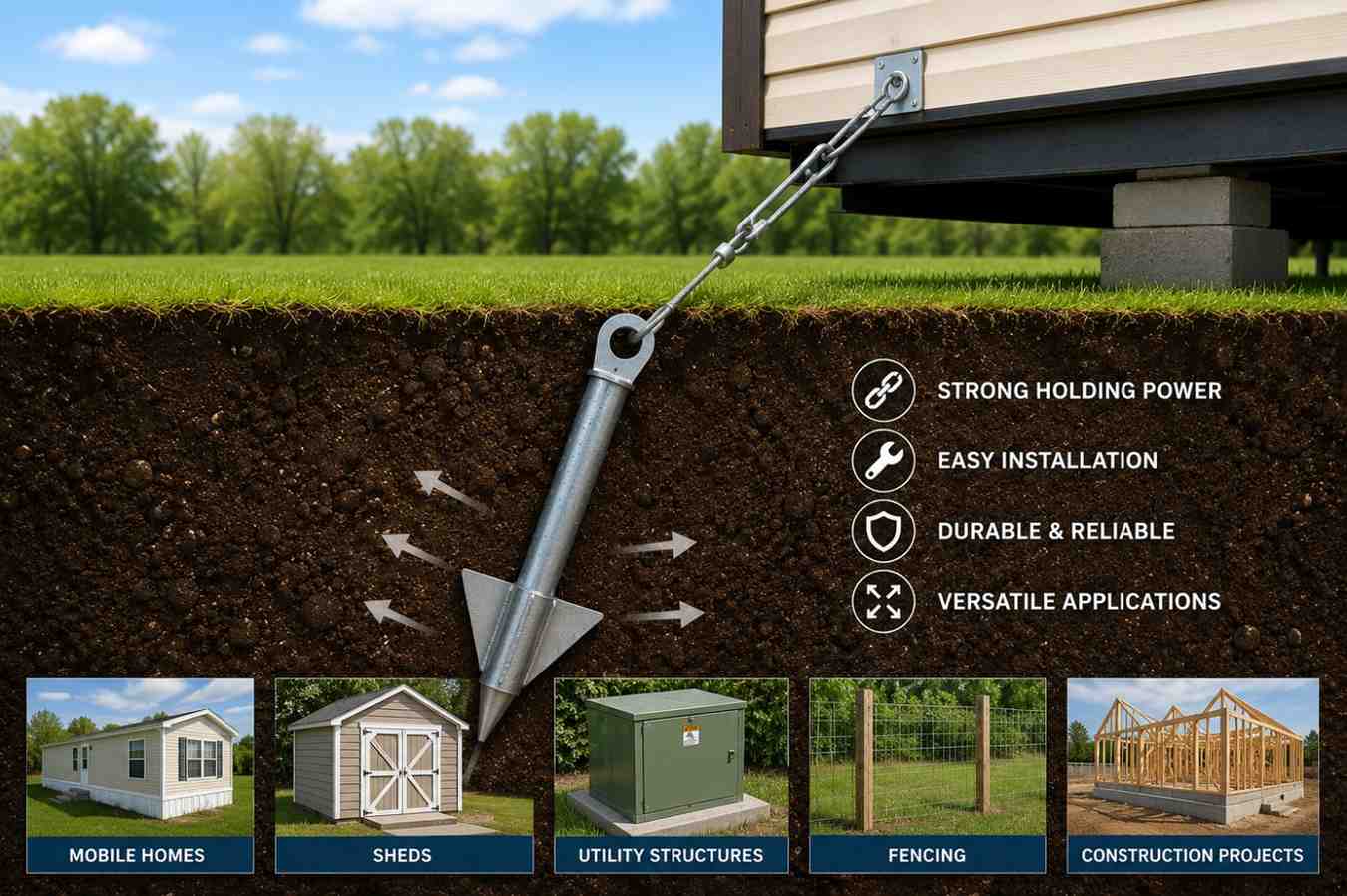
Arrowhead Anchors are commonly used for mobile homes, sheds, utility structures, fencing, tie-down systems, and general ground anchoring applications where a dependable connection between a structure and the soil is needed.

At B & R Stamping, Arrowhead Anchors are manufactured for Canadian soil conditions and are designed to deliver long-lasting performance across residential, commercial, and construction applications.

How Do Arrowhead Anchors Work?

Arrowhead Anchors work by using their unique shape to lock into the surrounding soil after installation.

The basic process includes:

1. Installation Into the Ground

The Arrowhead Anchor is driven into the soil using appropriate installation equipment. Its pointed arrow-shaped design helps it penetrate different ground conditions efficiently.

2. Soil Engagement

Once installed, the anchor creates resistance by engaging the surrounding soil. The deeper the anchor is installed, the more soil resistance it can utilize.

3. Load Transfer

When the attached structure experiences movement or pulling forces, the anchor transfers the load into the surrounding soil.

4. Increased Holding Strength

The arrowhead design helps create a larger resistance area, improving stability and reducing the chance of pull-out.

Benefits of Arrowhead Anchors

Strong Holding Power

Arrowhead Anchors are designed to provide dependable resistance against movement, making them suitable for many anchoring applications.

Easy Installation

Their compact design allows efficient installation with minimal ground disturbance compared to traditional foundation methods.

Versatile Applications

They can be used for:

  • Mobile homes
  • Sheds
  • Small structures
  • Utility installations
  • Equipment anchoring
  • Ground stabilization projects

Long-Term Reliability

When properly installed according to soil conditions, Arrowhead Anchors provide durable performance and structural support.

Common Uses of Arrowhead Anchors

Mobile Home Anchoring

Arrowhead Anchors are commonly used in manufactured housing applications to help protect against wind uplift and movement.

They provide an effective connection between the home and the ground, improving overall stability.

Shed and Small Structure Anchoring

Sheds, garages, and outdoor structures can benefit from secure anchoring to prevent shifting caused by wind or ground movement.

Utility Structures

Arrowhead Anchors can support various utility-related installations where reliable ground connection is required.

Construction Applications

They can be used for temporary or permanent anchoring solutions depending on project requirements.

Arrowhead Anchors vs Traditional Anchoring Methods

Traditional anchoring methods may require large concrete foundations, extensive excavation, or additional materials.

Arrowhead Anchors offer advantages such as:

  • Faster installation
  • Reduced site disruption
  • Strong soil engagement
  • Flexible application options
  • Lower installation complexity

Arrowhead Anchors in Different Soil Conditions

Soil conditions affect anchor performance.

Clay Soil

Dense clay can provide excellent holding capacity because the soil offers strong resistance around the anchor.

Sandy Soil

In loose sand, deeper installation may be required to achieve maximum holding strength.

Gravel Soil

Compacted gravel can provide good support, although large rocks may affect installation.

Soft Soil

Soft soils may require additional anchoring points or specialized installation methods to achieve the required stability.

A proper soil evaluation helps determine the best anchoring solution.

How to Choose the Right Arrowhead Anchor

The correct anchor selection depends on:

  • Soil type
  • Required holding capacity
  • Structure size
  • Environmental conditions
  • Installation depth
  • Project requirements

Professional guidance can help ensure the anchoring system matches the application.

Why Choose B & R Stamping Arrowhead Anchors?

For over 35 years, B & R Stamping has manufactured reliable anchoring products including:

  • Arrowhead Anchors
  • Load Lock Anchors
  • Earth Anchors
  • Ground Anchoring Systems
  • Structural Support Products

Our products are designed for Canadian conditions and are used in applications including:

  • Mobile homes
  • Modular buildings
  • Utility installations
  • Construction projects
  • Ground stabilization systems

Conclusion

Arrowhead Anchors provide an effective and reliable solution for securing structures to the ground. Their unique design helps transfer loads into surrounding soil, providing stability against movement and uplift.

Whether used for mobile homes, sheds, utilities, or general anchoring applications, choosing the correct Arrowhead Anchor System helps improve safety, durability, and long-term performance.

Frequently Asked Questions?

An Arrowhead Anchor is a ground anchoring system with an arrow-shaped design that penetrates soil and creates resistance to secure structures.

They are used for mobile homes, sheds, utility structures, fencing, and other applications requiring ground stability.

They hold by transferring loads into the surrounding soil and using soil resistance to prevent movement.

Yes. Arrowhead Anchors are commonly used for mobile home anchoring systems to help resist wind uplift and movement.

Yes, but performance depends on soil type, density, moisture, and installation depth.

Installation requirements depend on the project size and soil conditions. Proper installation ensures maximum holding performance.

What Are Leveling Jacks and Why Are They Important?

leveling jacks manufacture

What Are Leveling Jacks and Why Are They Important?

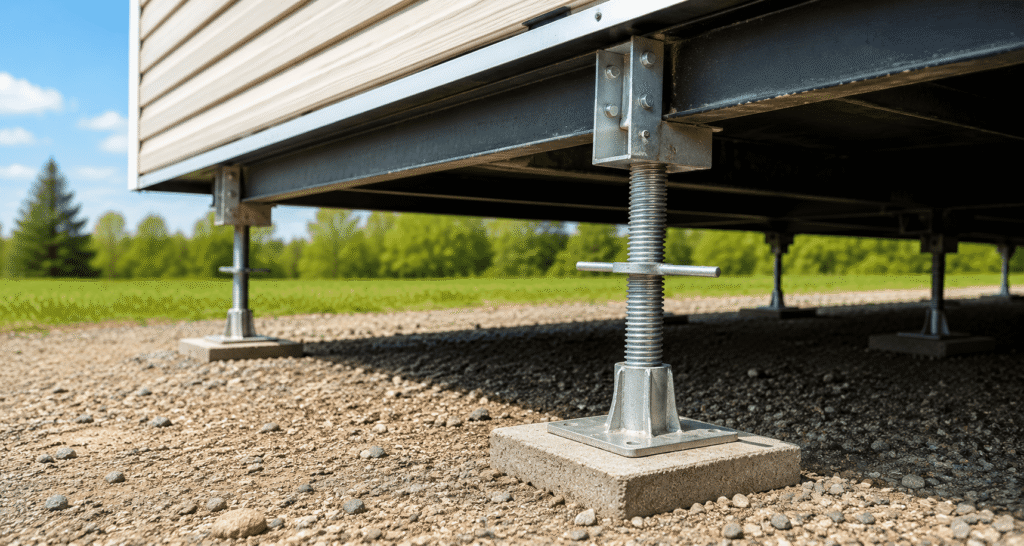
Leveling jacks are support devices designed to adjust, stabilize, and maintain the level position of structures, vehicles, and equipment. They are commonly used for mobile homes, RVs, trailers, modular buildings, and construction applications where proper alignment and stability are essential.

A properly leveled structure helps improve safety, comfort, and long-term performance. Without adequate leveling support, uneven ground conditions can create stress on frames, floors, doors, windows, and structural components.

At B & R Stamping, we manufacture quality anchoring and structural support products designed to provide reliable performance for residential, commercial, and industrial applications.

What Are Leveling Jacks?

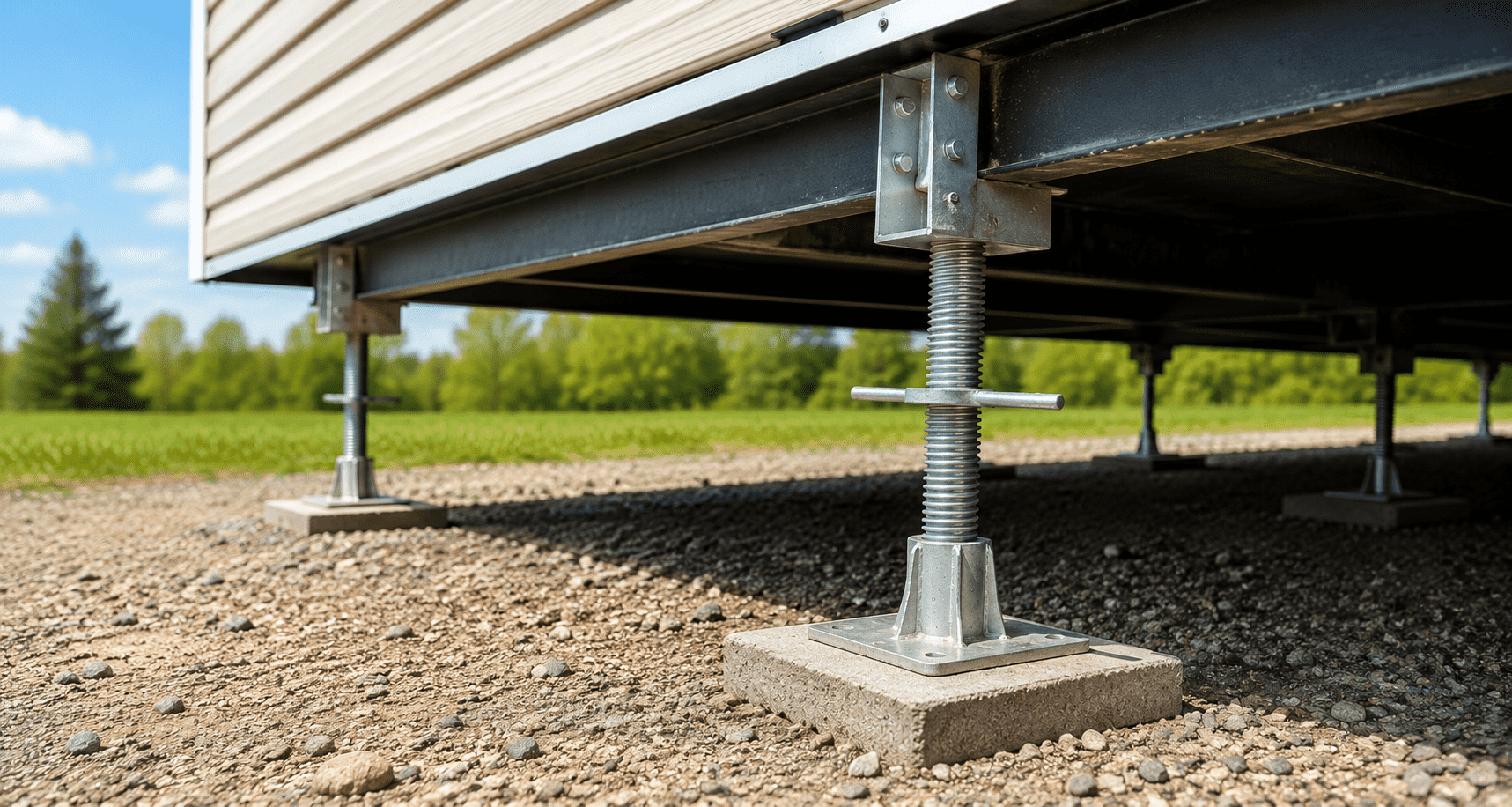
Leveling jacks are adjustable mechanical supports that raise, lower, or stabilize a structure to achieve a balanced position.

They typically include:

  • Adjustable support components
  • Strong steel construction
  • Load-bearing contact points
  • Adjustment mechanisms for height control

Unlike fixed supports, leveling jacks allow controlled adjustments to compensate for uneven surfaces or ground movement.

How Do Leveling Jacks Work?

Leveling jacks work by applying controlled support force between the structure and the ground.

The process includes:

1. Positioning the Jack

The leveling jack is placed under the designated support point of the structure.

2. Adjusting the Height

The jack is adjusted mechanically to raise or lower the structure until proper alignment is achieved.

3. Supporting the Load

Once adjusted, the jack transfers the weight of the structure safely to the ground.

4. Maintaining Stability

The support helps reduce movement caused by uneven terrain, settling, or environmental conditions.

Why Are Leveling Jacks Important?

Leveling jacks provide several important benefits:

Improved Structural Stability

Uneven surfaces can create stress on a structure. Leveling jacks help distribute loads evenly and maintain balance.

Better Comfort and Function

For mobile homes and RVs, proper leveling helps prevent:

  • Uneven floors
  • Door alignment issues
  • Window problems
  • Interior movement

Protection Against Damage

Maintaining proper support reduces strain on:

  • Frames
  • Foundations
  • Structural connections
  • Building components

Easy Adjustments

Adjustable leveling systems allow corrections when ground conditions change over time.

Common Applications of Leveling Jacks

Mobile Homes

Mobile home leveling jacks help maintain proper alignment and support after installation.

They help manage issues caused by:

  • Soil settlement
  • Ground movement
  • Seasonal changes

RVs and Trailers

Leveling jacks improve stability and comfort when parked on uneven surfaces.

Modular Buildings

They provide temporary or permanent support during installation and use.

Construction Equipment

Leveling systems help stabilize heavy equipment and structures.

Types of Leveling Jacks

Hydraulic Leveling Jacks

Use hydraulic pressure to provide controlled lifting and support.

Commonly used for:

  • RVs
  • Heavy equipment
  • Industrial applications

Mechanical Leveling Jacks

Use manual adjustment mechanisms for reliable support.

Commonly used for:

  • Mobile homes
  • Trailers
  • Small structures

Adjustable Support Jacks

Designed for applications requiring flexibility in height adjustment.

Leveling Jacks and Soil Conditions

The performance of leveling jacks depends on the ground beneath them.

Important factors include:

  • Soil strength
  • Ground stability
  • Moisture conditions
  • Surface preparation

Soft or unstable soils may require additional support solutions to prevent sinking or movement.

How Leveling Jacks Work With Anchoring Systems

Leveling jacks and anchoring systems often work together to provide complete structural support.

While leveling jacks help maintain proper height and alignment, anchors help resist:

  • Wind uplift
  • Horizontal movement
  • Structural shifting

Together, they create a more stable support system for structures such as mobile homes and modular buildings.

Choosing the Right Leveling Jack

The correct leveling jack depends on:

  • Structure weight
  • Application type
  • Required adjustment range
  • Ground conditions
  • Environmental exposure

Selecting the proper support system helps improve safety and long-term reliability.

Why Choose B & R Stamping?

For more than 35 years, B & R Stamping has manufactured reliable structural support products including:

Our products are designed to support Canadian construction and anchoring requirements across residential, commercial, and industrial projects.

Leveling jacks are an essential component for maintaining stability, alignment, and safety in many structures and equipment applications. By allowing controlled height adjustments and providing reliable support, they help protect structures from uneven ground conditions and movement.

Whether used for mobile homes, RVs, trailers, or modular structures, choosing the right leveling jack system ensures better performance and long-term stability.

Frequently Asked Questions?

Leveling jacks are used to adjust height, stabilize structures, and maintain proper alignment on uneven surfaces.

Yes. Leveling jacks help maintain mobile home stability and reduce stress caused by uneven ground or settling.

They distribute structural loads evenly and provide adjustable support between the structure and the ground.

Yes, leveling jacks are designed to compensate for uneven surfaces when properly installed.

No. Leveling jacks provide support and adjustment, while anchors help secure structures against movement and uplift.

Inspection frequency depends on the structure, soil conditions, and environmental factors, but regular checks help maintain safe performance.

What Are Load Lock Anchors and How Do They Work?

Load Lock Anchors

What Are Load Lock Anchors and How Do They Work?

Load Lock Anchors are heavy-duty ground anchoring solutions designed to provide exceptional holding strength for structures that require secure and reliable support. These anchors are commonly used for mobile homes, modular buildings, utility structures, retaining applications, and other projects where stability and resistance against movement are essential.

Unlike traditional anchors that rely only on surface contact, Load Lock Anchors are engineered to transfer loads deep into the surrounding soil. This creates strong resistance against uplift, pulling forces, and structural movement.

At B & R Stamping, Load Lock Anchors are manufactured to perform in a wide range of Canadian soil conditions, providing dependable anchoring solutions for residential, commercial, and industrial applications.

How Do Load Lock Anchors Work?

Load Lock Anchors work by creating a secure connection between a structure and the surrounding ground.

The installation process typically includes:

1. Anchor Installation

The Load Lock Anchor is driven or installed into the soil at the required depth. The anchor design allows it to penetrate the ground while maintaining structural strength.

2. Soil Engagement

Once installed, the anchor interacts with the surrounding soil. The soil resistance around the anchor creates holding capacity.

3. Load Transfer

When tension is applied, the anchor transfers the force into the deeper soil layers rather than allowing the structure to move.

4. Long-Term Stability

The combination of anchor design, installation depth, and soil resistance helps maintain stability over time.

Why Choose Load Lock Anchors?

Load Lock Anchors are designed for applications where reliable holding power is required.

Key benefits include:

High Holding Capacity

The anchor design provides strong resistance against pull-out forces and movement.

Reliable Performance in Different Soils

Load Lock Anchors can perform effectively in many soil conditions, including:

  • Clay soils
  • Compact sand
  • Gravel mixtures
  • Medium-density soils

Faster Installation

Compared to traditional foundation methods, ground anchoring systems can often be installed faster with less site disruption.

Cost-Effective Solution

Anchoring systems can reduce the need for large concrete foundations while providing dependable structural support.

Applications of Load Lock Anchors

Load Lock Anchors are commonly used for:

Mobile Homes and Manufactured Housing

They help secure mobile homes against wind uplift and ground movement.

Modular Buildings

Provides additional stability for temporary and permanent modular structures.

Utility Installations

Used for supporting poles, equipment, and other utility-related structures.

Retaining and Stabilization Projects

Supports soil stabilization and structural reinforcement applications.

Industrial Applications

Provides anchoring solutions where strong ground connection is required.

Load Lock Anchors vs Traditional Anchoring Systems

Traditional anchoring methods may depend heavily on surface weight or basic attachment points. Load Lock Anchors create resistance by engaging deeper soil layers.

Advantages include:

  • Better load distribution
  • Improved resistance against uplift
  • Less excavation required
  • Adaptability to different soil conditions
  • Long-term reliability

Load Lock Anchors in Different Soil Conditions

Soil conditions play an important role in anchor performance.

Clay Soil

Dense clay can provide excellent holding strength because of its compact structure. Load Lock Anchors perform well when properly installed in stable clay conditions.

Sandy Soil

Sandy soil may require deeper installation because loose particles provide less resistance compared to dense soil.

Gravel and Mixed Soil

Compacted gravel mixtures can provide strong support, although installation methods may need adjustment depending on rock content.

Soft Soil

Soft soils may require additional anchors, deeper installation, or specialized solutions to achieve the required holding capacity.

Proper soil evaluation helps determine the correct anchoring solution.

How Soil Testing Improves Load Lock Anchor Performance

Before installation, soil testing helps determine:

  • Soil density
  • Ground resistance
  • Installation depth
  • Expected holding capacity
  • Suitable anchor selection

A proper evaluation helps ensure the Load Lock Anchor System performs safely and effectively.

Why Choose B & R Stamping Load Lock Anchors?

For more than 35 years, B & R Stamping has manufactured Earth Anchors, Load Lock Anchors, Arrowhead Anchors, and Ground Anchoring Systems designed for Canadian conditions.

Our anchoring solutions support:

  • Mobile homes
  • Modular buildings
  • Utility structures
  • Construction projects
  • Ground stabilization applications

With experience in different soil environments, B & R Stamping helps customers select the right anchoring system for their project needs.

Load Lock Anchors provide a strong and reliable solution for securing structures and resisting movement caused by wind, soil conditions, and external forces. Their ability to transfer loads deep into the ground makes them an effective choice for many residential, commercial, and industrial applications.

Choosing the correct Load Lock Anchor System based on soil conditions and project requirements helps improve safety, stability, and long-term performance.

Frequently Asked Questions?

A Load Lock Anchor is a heavy-duty ground anchoring system designed to secure structures by transferring loads into surrounding soil for improved stability.

Load Lock Anchors work by engaging with the soil below the surface and creating resistance against pulling forces, uplift, and movement.

They are commonly used for mobile homes, modular buildings, utility structures, construction projects, and stabilization applications.

Load Lock Anchors can work in many soil conditions, but performance depends on soil density, moisture, composition, and installation depth.

Soil testing is recommended because it helps determine the correct anchor type, installation depth, and expected holding capacity.

Load Lock Anchors provide strong holding power by transferring loads deeper into the soil, making them effective for applications requiring reliable stability.

Earth Anchors vs Ground Anchors: Which Solution Is Right for Your Project?

Earth Anchors vs Ground Anchors: Which Solution Is Right for Your Project?

Earth Anchors vs Ground Anchors: Which Solution Is Right for Your Project?

When planning a construction, infrastructure, mobile home, modular building, or retaining wall project, choosing the right anchoring solution is essential for long-term stability and safety. Two terms that are often used interchangeably are Earth Anchors and Ground Anchors. While they are closely related, there are important differences that can affect the performance and success of your project.

At B & R Stamping, we manufacture high-quality Earth Anchor Systems, Ground Anchoring Systems, Load Lock Anchors, Arrowhead Anchors, Frame Ties, and Structural Support Products for customers across Canada. Understanding the differences between these anchoring systems can help contractors, engineers, builders, and property owners select the best solution for their specific application.

What Are Ground Anchors?

Ground Anchors are a broad category of anchoring systems designed to transfer structural loads into the ground. These systems are used to provide resistance against tension, uplift, and lateral movement. Ground anchors are commonly used in construction, infrastructure, retaining walls, embankments, slope stabilization, and industrial projects where additional structural support is required.

Ground Anchors can be installed in soil, rock, concrete, or mixed ground conditions. Depending on the project, they may use mechanical locking systems, expansion mechanisms, or specialized anchoring methods to achieve the required holding strength.

Because Ground Anchors cover a wide range of products and installation methods, they are often considered the general category of below-grade anchoring solutions.

What Are Earth Anchors?

Earth Anchors are a specific type of Ground Anchor designed primarily for installation in soil conditions. They secure structures by creating resistance within the surrounding earth, helping prevent movement caused by wind loads, soil pressure, vibration, or environmental forces.

Earth Anchors are widely used throughout Canada for securing:

  • Mobile homes
  • Manufactured housing
  • Modular buildings
  • Portable structures
  • Utility installations
  • Temporary structures
  • Storage buildings
  • Retaining walls
  • Ground stabilization projects

Unlike some larger engineered ground anchors that require extensive drilling and grouting, Earth Anchors are often designed for faster installation while still providing exceptional holding power.

Earth Anchors vs Ground Anchors: Key Differences

The primary difference is that Ground Anchors represent a broad category of anchoring systems, while Earth Anchors are specifically designed for use in soil.

Ground Anchors may be installed in rock, concrete, embankments, slopes, or soil conditions depending on project requirements. Earth Anchors are generally intended for soil-based applications where dependable holding strength and efficient installation are important.

Another difference involves project size and complexity. Ground Anchors are often used in large infrastructure and engineering projects, while Earth Anchors are frequently used for mobile homes, portable structures, utility installations, and commercial applications.

Although the terminology is different, both systems serve the same purpose—providing stability, safety, and resistance against movement.

Advantages of Earth Anchors

Earth Anchors offer several benefits for residential, commercial, and industrial projects.

One major advantage is their ease of installation. Many Earth Anchor Systems can be installed quickly using standard tools and equipment, reducing labor costs and project timelines.

Earth Anchors are also highly versatile and can be used in a variety of applications, including modular buildings, mobile homes, sheds, utility structures, and temporary installations.

Another benefit is their strong holding power. When properly installed, modern Earth Anchors can provide excellent resistance to uplift and movement, helping structures remain secure even in challenging weather conditions.

Advantages of Ground Anchors

Ground Anchors are often selected for projects requiring higher load capacities and specialized engineering solutions.

They are commonly used for retaining walls, embankment stabilization, infrastructure construction, excavation support systems, and slope reinforcement projects.

Ground Anchors can be designed to accommodate complex soil conditions and large structural loads, making them suitable for heavy-duty construction and engineering applications.

For projects involving significant structural demands, Ground Anchors often provide the long-term performance and reliability required by engineers and contractors.

Load Lock Anchors and Arrowhead Anchors

B & R Stamping manufactures two popular Earth Anchor solutions used throughout Canada: Load Lock Anchors and Arrowhead Anchors.

Load Lock Anchors

Load Lock Anchors are engineered to provide exceptional holding power and structural stability. These anchors work by rotating and locking into position beneath the soil surface after installation. This unique design allows them to engage undisturbed soil and achieve superior anchoring performance.

Load Lock Anchors are commonly used for:

  • Mobile homes
  • Portable buildings
  • Utility installations
  • Construction projects
  • Ground stabilization applications

Arrowhead Anchors

Arrowhead Anchors are manufactured using heavy-duty steel and are designed to provide dependable ground anchoring in a wide range of soil conditions.

These anchors are frequently used for:

  • Mobile home tie-downs
  • Shed anchoring
  • Portable structures
  • Utility projects
  • Temporary installations

Their durable construction and galvanized cable assemblies make them a reliable choice for long-term outdoor use.

How to Choose the Right Anchoring Solution

Selecting the right anchoring system depends on several factors.

First, evaluate the soil conditions. Different soil classifications affect anchor performance and installation depth requirements.

Second, determine the load requirements of the structure. Larger structures or projects exposed to higher wind loads may require stronger anchoring systems.

Third, consider environmental conditions such as frost, moisture levels, wind exposure, and ground movement.

Finally, assess whether the project requires a temporary or permanent anchoring solution. Understanding these factors will help ensure that the selected anchor system provides maximum performance and long-term stability.

Conclusion

Choosing between Earth Anchors and Ground Anchors depends on your project requirements, soil conditions, and structural demands. Ground Anchors represent a broad category of anchoring systems used in many construction and engineering applications, while Earth Anchors are specifically designed for soil-based stabilization and structural support.

For mobile homes, modular buildings, portable structures, and general ground stabilization projects, Earth Anchors such as Load Lock Anchors and Arrowhead Anchors often provide an effective and cost-efficient solution. For retaining walls, embankments, and large infrastructure projects, Ground Anchors may be the preferred choice.

At B & R Stamping, we manufacture high-quality Earth Anchor Systems, Ground Anchoring Systems, Load Lock Anchors, Arrowhead Anchors, Frame Ties, and Structural Support Products designed to deliver dependable performance throughout Canada. Contact our team to learn more about selecting the right anchoring solution for your next project.

Frequently Asked Questions?

Ground Anchors are a broad category of anchoring systems used to transfer loads into soil, rock, or concrete. Earth Anchors are a specific type of Ground Anchor designed primarily for soil-based applications such as mobile homes, portable buildings, and ground stabilization projects.

Neither is universally better. The right solution depends on the project. Earth Anchors are ideal for soil conditions and mobile structures, while Ground Anchors are often used for retaining walls, infrastructure projects, and high-load engineering applications.

Earth Anchors are commonly used for mobile homes, modular buildings, sheds, portable structures, utility installations, retaining walls, scaffolding, and ground stabilization systems.

Ground Anchors are used for retaining walls, embankment stabilization, slope reinforcement, bridge construction, excavation support, infrastructure projects, and structural tie-back systems.

Earth Anchors are installed below the ground surface and activated by tension. Once locked into position, they engage undisturbed soil and create resistance against uplift, movement, and structural loads.

Earth Anchors can be installed in many soil conditions, including clay, sand, gravel, and mixed soils. The holding capacity depends on soil density, moisture content, anchor design, and installation depth.

Load Lock Anchors are high-performance Earth Anchors designed to rotate and lock beneath the soil surface when tension is applied. They provide excellent holding power and long-term structural stability.

Arrowhead Anchors are heavy-duty steel Earth Anchors used to secure mobile homes, sheds, portable buildings, utility structures, and temporary installations requiring reliable ground anchoring.

B & R Stamping has more than 35 years of manufacturing experience and specializes in Earth Anchor Systems, Ground Anchoring Systems, Load Lock Anchors, Arrowhead Anchors, Frame Ties, and structural support products trusted by contractors and builders across Canada.

How Do Earth Anchors Work in Different Soil Conditions?

Earth Anchors

How Do Earth Anchors Work in Different Soil Conditions?

Earth anchors are one of the most effective solutions for securing structures, stabilizing retaining walls, supporting utility installations, and protecting mobile homes from wind uplift. However, the performance of an Earth Anchor System depends heavily on one critical factor: soil conditions.

Different soil types provide different levels of resistance and holding strength. Understanding how earth anchors perform in various soil conditions helps contractors, engineers, and property owners select the right Ground Anchoring System for maximum stability and long-term performance.

At B & R Stamping, we manufacture Earth Anchors, Load Lock Anchors, Arrowhead Anchors, and Ground Anchoring Systems designed to perform in a wide range of Canadian soil conditions.

Why Soil Conditions Matter for Earth Anchors

Earth anchors work by transferring loads into the surrounding soil. Once installed and activated, the anchor engages undisturbed soil beneath the surface, creating resistance against uplift, movement, and structural loads.

The denser and more stable the soil, the greater the anchor’s holding capacity. Softer soils may require deeper installation, larger anchors, or additional anchoring points to achieve the desired holding strength.

Factors that influence anchor performance include:

  • Soil density
  • Soil moisture content
  • Soil composition
  • Installation depth
  • Groundwater conditions
  • Environmental factors

Proper soil evaluation is essential before installing any Earth Anchor System.

Earth Anchors in Clay Soils

Clay soils are among the most common soil types used with ground anchoring systems. Dense clay provides excellent resistance and can generate strong holding capacity when anchors are properly installed.

Benefits of Clay Soils:

  • High soil density
  • Strong resistance to uplift
  • Good long-term stability
  • Excellent load-bearing characteristics

Challenges:

  • Extremely hard clay may make installation more difficult.
  • Clay can expand and contract with moisture changes.
  • Frozen clay conditions may affect installation depth.

Load Lock Anchors and Arrowhead Anchors often perform exceptionally well in medium to dense clay conditions.

Earth Anchors in Sandy Soils

Sand provides less resistance than clay because individual particles do not bond together as tightly. However, properly installed Earth Anchors can still provide excellent performance in sandy environments.

Benefits of Sandy Soils:

  • Easier installation
  • Good drainage
  • Reduced frost-related movement

Challenges:

  • Lower holding capacity compared to dense clay
  • May require deeper installation
  • Loose sand can reduce anchor resistance

In sandy soils, anchor depth becomes particularly important to maximize holding strength and structural stability.

Earth Anchors in Gravel & Mixed Soils

Gravel and mixed soil conditions can provide excellent holding power when properly compacted. Many construction and infrastructure projects encounter gravel, sand, and clay mixtures.

Benefits of Gravel Soils:

  • Strong load-bearing characteristics
  • Good drainage
  • Stable support conditions

Challenges:

  • Large rocks may interfere with installation
  • Installation depth may vary
  • Soil consistency may differ across the site

Ground Anchoring Systems designed for mixed soils can provide reliable performance when soil conditions are properly evaluated before installation.

Earth Anchors in Rocky Soil Conditions

Rocky ground presents unique installation challenges. Standard Earth Anchors may encounter difficulties penetrating heavy rock formations or bedrock.

In these conditions, specialized solutions such as:

  • X Model Anchors
  • Expansion Anchors
  • Rock Anchors
  • Custom Ground Anchoring Systems

may be required.

B & R Stamping’s X Model Anchor is specifically designed for loose heavy rock conditions where traditional earth anchors may not provide adequate performance.

Benefits:

  • High resistance levels
  • Excellent long-term stability

Challenges:

  • Difficult installation
  • May require specialized anchoring systems
  • Increased installation time

Earth Anchors in Soft Soil Conditions

Soft soils include:

  • Wet clay
  • Silt
  • Fill material
  • Organic soils
  • Marsh conditions

These soils typically provide the lowest holding capacity and often require special consideration during anchor design and installation.

Challenges include:

  • Reduced soil resistance
  • Lower holding strength
  • Increased installation depth requirements
  • Greater susceptibility to movement

In softer soils, additional anchors or larger anchoring systems may be required to achieve desired load capacities.

Understanding Soil Classifications

Anchor performance is often evaluated using soil classifications.

Typical classifications include:

Class 1 Soil

Solid bedrock and concrete surfaces.

Class 2 Soil

Dense clay, compact gravel, sandstone, and laminated rock.

Class 3 Soil

Shale, hardpan, and compact clay-gravel mixtures.

Class 4 Soil

Gravel, claypan, and compact sand mixtures.

Class 5 Soil

Medium clay, loose gravel, and compact coarse sand.

Class 6 Soil

Soft clay, loose coarse sand, and clay-silt mixtures.

Class 7 Soil

Fill material, wet clay, and loose fine sand.

Class 8 Soil

Swamp conditions, saturated silt, and organic soils.

The soil classification helps determine the correct anchor type, installation depth, and expected holding capacity.

How Soil Testing Improves Anchor Performance

Before installing Earth Anchor Systems, soil testing helps determine:

  • Soil consistency
  • Density
  • Moisture content
  • Load-bearing capacity
  • Installation depth requirements

One common method is using a torque probe, which measures underground soil resistance and helps determine the most suitable anchoring solution for the site.

Proper soil testing helps maximize holding power and reduce installation risks.

Choosing the Right Earth Anchor for Your Soil Conditions

Different projects require different anchoring solutions.

Load Lock Anchors

Ideal for medium-density soils and applications requiring high holding power.

Arrowhead Anchors

Suitable for mobile homes, sheds, utility structures, and general anchoring applications.

X Model Anchors

Designed specifically for loose heavy rock conditions.

Embankment Control Anchors

Used for retaining walls, slope stabilization, and infrastructure projects.

Selecting the correct anchor system based on soil conditions helps improve safety, structural stability, and long-term performance.

Why Contractors Trust B & R Stamping

For more than 35 years, B & R Stamping has manufactured Earth Anchor Systems, Ground Anchoring Systems, Load Lock Anchors, Arrowhead Anchors, Frame Ties, and Structural Support Products for customers across Canada.

Our experience with Canadian soil conditions allows us to provide anchoring solutions designed for:

  • Mobile Homes
  • Modular Buildings
  • Retaining Walls
  • Infrastructure Projects
  • Utility Installations
  • Industrial Facilities
  • Ground Stabilization Systems

We help customers select the right anchoring solution for their specific project requirements and soil conditions.

Conclusion

Earth anchors can provide exceptional holding power and structural stability, but their effectiveness depends heavily on soil conditions. Understanding how anchors perform in clay, sand, gravel, rock, and soft soils helps ensure proper installation and long-term performance.

Whether you are securing a mobile home, stabilizing a retaining wall, or supporting an infrastructure project, choosing the correct Earth Anchor System for your soil conditions is essential for safety and reliability.

B & R Stamping manufactures high-quality Earth Anchors, Load Lock Anchors, Arrowhead Anchors, and Ground Anchoring Systems designed to perform in a wide range of soil environments across Canada.

Frequently Asked Questions?

Dense clay and well-compacted gravel soils generally provide the highest holding capacities because they offer strong resistance against anchor movement.

Yes. Earth Anchors can be installed in sandy soil, although deeper installation may be required to achieve maximum holding strength.

X Model Anchors and Expansion Anchors are often used in rocky conditions where standard earth anchors may not perform effectively.

Soil testing helps determine soil strength, density, and installation depth requirements, ensuring maximum anchor performance.

Yes. Soft soils typically provide lower resistance and may require deeper installation or additional anchoring systems to achieve required holding capacities.

What Are Earth Anchors? Complete Guide to Ground Anchoring Systems

What Are Earth Anchors?

What Are Earth Anchors? Complete Guide to Ground Anchoring Systems

Ground stability is critical for the safety and performance of structures ranging from mobile homes and portable buildings to retaining walls, utility installations, and major infrastructure projects. One of the most effective solutions used to secure structures and prevent movement is the Earth Anchor System.

Earth anchors, also known as ground anchors, are widely used throughout Canada to provide structural support, resist uplift forces, and improve stability in a variety of soil conditions. Whether you are securing a mobile home, stabilizing a retaining wall, or supporting a construction project, understanding how earth anchors work can help you choose the right anchoring solution.

What Are Earth Anchors?

Earth anchors are devices installed below the ground surface to provide resistance against pulling, lifting, or shifting forces. Once installed and activated, the anchor transfers loads into the surrounding soil, creating a secure connection between the structure and the ground.

Unlike traditional concrete foundations, earth anchors can often be installed quickly and cost-effectively while providing excellent holding power. They are commonly manufactured from steel or aluminum and are available in several designs depending on the application and soil conditions.

How Do Earth Anchor Systems Work?

Earth anchor systems work by transferring tension loads into the surrounding soil. After the anchor is driven or installed into the ground, it is activated by applying tension to the cable or rod attached to the anchor.

As tension is applied, the anchor rotates or locks into position beneath the soil surface. Once locked, it engages undisturbed soil and creates resistance against uplift, lateral movement, and structural loads. The deeper the anchor is installed and the stronger the soil conditions, the greater the holding capacity may become.

Types of Earth Anchors

Several types of earth anchors are used depending on project requirements and ground conditions.

Load Lock Anchors

Load Lock Anchors are designed to plane into position beneath the soil surface when tension is applied. These anchors provide exceptional holding strength and are commonly used for mobile homes, portable buildings, utility installations, and construction projects.

Arrowhead Anchors

Arrowhead Anchors are manufactured from heavy-duty steel and are designed to provide dependable holding power in various soil conditions. They are widely used for sheds, mobile homes, temporary structures, and utility applications.

Earth Screw Anchors

Earth Screw Anchors feature a helical design that allows them to be screwed into the ground. These anchors are commonly used for foundations, retaining walls, fencing systems, and utility support structures.

Retaining Wall Anchors

Retaining wall anchors are used to stabilize retaining walls and embankments by transferring loads into stable soil behind the structure. They help prevent wall movement and improve long-term structural stability.

Common Applications of Ground Anchoring Systems

Earth anchor systems are used across many industries and applications.

Construction Projects

Ground anchors provide temporary and permanent stabilization for construction sites, scaffolding systems, excavation support, and structural installations.

Mobile Homes & Modular Buildings

Mobile homes and modular buildings rely on earth anchors to resist uplift forces caused by wind and severe weather conditions.

Retaining Walls & Embankments

Ground anchoring systems provide reinforcement for retaining walls, slopes, and embankments where soil movement may occur.

Utility Installations

Utility poles, telecommunications structures, and electrical installations often use earth anchors for additional stability.

Marine Applications

Boat docks, floating structures, and marine facilities frequently use anchoring systems to maintain position and resist environmental forces.

Benefits of Earth Anchor Systems

Earth anchors offer several advantages compared to traditional support methods.

Strong Holding Power

Modern earth anchor systems are engineered to provide exceptional resistance against uplift and movement.

Cost-Effective Installation

Earth anchors can often be installed more quickly and economically than conventional concrete foundations.

Versatile Applications

They can be used in residential, commercial, industrial, agricultural, and infrastructure projects.

Minimal Site Disruption

Installation generally requires less excavation, reducing disturbance to the surrounding environment.

Long-Term Durability

High-quality earth anchors are designed to withstand harsh environmental conditions while maintaining reliable performance over many years.

Factors That Affect Anchor Performance

Several factors influence the performance of an earth anchor system:

  • Soil classification and density
  • Installation depth
  • Moisture content
  • Anchor design
  • Load requirements
  • Proper installation techniques

Understanding these factors is essential for selecting the correct anchoring solution and achieving maximum holding capacity.

Choosing the Right Earth Anchor System

The best earth anchor system depends on the specific requirements of your project. Factors such as soil conditions, structural loads, environmental exposure, and installation methods should all be considered before selecting an anchor.

Working with an experienced manufacturer can help ensure that the appropriate anchoring system is selected for maximum safety, performance, and long-term reliability.

Why Choose B & R Stamping?

For more than 35 years, B & R Stamping has been manufacturing reliable Earth Anchor Systems, Arrowhead Anchors, Load Lock Anchors, Ground Anchoring Systems, Leveling Jacks, and Structural Support Products for customers across Canada.

Based in Oakville, Ontario, our team provides durable anchoring solutions designed to meet the needs of contractors, builders, engineers, mobile home installers, and industrial organizations. Whether you require standard anchoring products or custom manufacturing solutions, B & R Stamping is committed to delivering quality products and dependable service.

Conclusion

Earth anchors play a critical role in modern construction, infrastructure, utility, and structural support projects. Their ability to provide reliable holding power, improve ground stability, and resist environmental forces makes them one of the most effective anchoring solutions available.

Whether you need anchoring systems for mobile homes, retaining walls, utility installations, or industrial applications, choosing the right earth anchor system is essential for ensuring long-term structural stability and safety.

If you are looking for dependable Earth Anchor Systems in Canada, contact B & R Stamping to learn more about our complete range of anchoring products and custom manufacturing solutions.

Frequently Asked Questions?

Earth Anchors are used to secure structures to the ground and prevent movement caused by wind, soil pressure, vibration, or environmental forces.

Ground Anchors is a broad term used for below-grade anchoring systems, while Earth Anchors are a specific type of ground anchor designed for soil applications.

Earth Anchors can be used in many soil conditions, although performance depends on soil density, moisture content, and installation depth.

Yes. Earth Anchors are commonly used to stabilize retaining walls, embankments, and slope stabilization systems.

When properly installed and maintained, high-quality Earth Anchor Systems can provide reliable performance for many years.

What Are the Benefits of Heavy-Duty Earth Anchors?

Heavy-Duty Earth Anchors

What Are the Benefits of Heavy-Duty Earth Anchors?

Ground stability is one of the most important factors in the success and safety of any construction, infrastructure, industrial, or mobile structure project. Whether securing a mobile home, stabilizing a retaining wall, supporting a utility installation, or protecting a portable building against wind uplift, selecting the right anchoring solution is essential.

Heavy-Duty Earth Anchors provide a reliable and cost-effective method for securing structures and improving long-term stability. Designed to withstand significant loads and challenging environmental conditions, these anchoring systems are widely used throughout Canada in residential, commercial, industrial, and infrastructure applications.

At B & R Stamping, we manufacture high-performance Earth Anchor Systems, Ground Anchoring Systems, Load Lock Anchors, Arrowhead Anchors, Frame Ties, and Structural Support Products designed to provide dependable holding power and structural security.

What Are Heavy-Duty Earth Anchors?

Heavy-Duty Earth Anchors are specialized anchoring devices installed below ground level to secure structures and resist forces that may cause movement, uplift, or instability. Unlike basic anchoring systems, heavy-duty anchors are engineered to provide increased holding strength and long-term durability in demanding applications.

These anchors are commonly used in:

  • Mobile homes and manufactured housing
  • Modular buildings
  • Construction projects
  • Retaining walls
  • Utility installations
  • Scaffolding systems
  • Infrastructure projects
  • Industrial facilities
  • Ground stabilization systems

Once installed and properly activated, the anchor transfers loads into the surrounding soil, creating resistance against external forces and improving structural stability.

Superior Holding Power

One of the biggest advantages of heavy-duty earth anchors is their exceptional holding capacity. These systems are designed to engage undisturbed soil beneath the surface, creating strong resistance against uplift and movement.

Heavy-duty anchors can help secure structures exposed to:

  • High wind loads
  • Soil movement
  • Vibration
  • Environmental stress
  • Structural tension forces

This increased holding power helps improve safety and reduces the risk of structural displacement.

Improved Structural Stability

Structural stability is critical for both temporary and permanent installations. Heavy-duty earth anchors help keep structures securely connected to the ground, reducing movement caused by weather conditions or shifting soil.

Applications that benefit from improved stability include:

  • Mobile homes
  • Portable buildings
  • Utility structures
  • Storage facilities
  • Construction equipment
  • Retaining wall systems

By minimizing movement, these anchors help extend the life of the structure and reduce maintenance requirements.

Reliable Performance in Different Soil Conditions

Heavy-duty earth anchors are designed to perform in a variety of soil conditions, including:

  • Clay
  • Sand
  • Gravel
  • Mixed soils
  • Compact soils

Proper anchor selection and installation allow these systems to provide dependable holding strength even in challenging ground conditions.

For projects involving loose soils or varying ground conditions, specialized anchoring systems such as Load Lock Anchors, Arrowhead Anchors, and X Model Anchors may be recommended.

Cost-Effective Alternative to Traditional Foundations

Many projects require structural support but do not justify the cost and complexity of large concrete foundations.

Heavy-duty earth anchors offer several cost-saving benefits:

  • Reduced excavation requirements
  • Faster installation
  • Lower labor costs
  • Minimal site disruption
  • Less equipment required

For many applications, earth anchors provide a practical and economical alternative while still delivering excellent structural support.

Faster Installation Times

Compared to traditional foundation systems, heavy-duty earth anchors can often be installed quickly and efficiently.

Benefits of faster installation include:

  • Reduced project delays
  • Lower labor expenses
  • Faster project completion
  • Minimal disruption to surrounding areas

This makes earth anchors particularly attractive for temporary structures, modular buildings, utility installations, and mobile home projects.

Long-Term Durability

High-quality earth anchor systems are engineered for long service life and dependable performance.

Features that contribute to durability include:

  • Heavy-duty steel construction
  • Corrosion-resistant materials
  • Galvanized components
  • Durable cable assemblies
  • Weather-resistant designs

These characteristics allow anchors to perform effectively in harsh outdoor environments throughout Canada.

Enhanced Wind Resistance

Strong winds can create uplift forces capable of damaging or displacing structures that are not properly secured.

Heavy-duty earth anchors help protect structures by:

  • Resisting uplift forces
  • Securing buildings to the ground
  • Improving overall structural stability
  • Reducing movement during storms

This is especially important for mobile homes, modular buildings, portable offices, sheds, and temporary structures.

Versatile Applications Across Multiple Industries

One of the reasons heavy-duty earth anchors are so widely used is their versatility.

Common applications include:

Construction Projects

Earth anchors provide stability for temporary and permanent construction structures.

Mobile Homes & Modular Buildings

Anchors help secure structures and comply with anchoring requirements.

Retaining Walls

Anchoring systems help prevent wall movement and improve slope stability.

Utility Installations

Utility poles, telecommunications equipment, and service structures often require anchoring support.

Industrial Facilities

Heavy-duty anchors help stabilize equipment, support structures, and storage systems.

Infrastructure Projects

Roadways, embankments, and public infrastructure projects frequently utilize ground anchoring systems.

Popular Heavy-Duty Earth Anchor Solutions

Load Lock Anchors

Load Lock Anchors are engineered to provide exceptional holding power by rotating and locking beneath the soil surface. Their unique design allows them to engage undisturbed soil and achieve excellent stability.

Arrowhead Anchors

Arrowhead Anchors are manufactured from heavy-gauge steel and provide reliable holding strength for mobile homes, sheds, utility structures, and portable buildings.

X Model Anchors

X Model Anchors are designed for loose heavy rock conditions where traditional earth anchors may not provide sufficient resistance.

Why Choose B & R Stamping?

For more than 35 years, B & R Stamping has manufactured Earth Anchor Systems, Ground Anchoring Systems, Arrowhead Anchors, Load Lock Anchors, Frame Ties, Leveling Jacks, and Structural Support Products for customers throughout Canada.

Our anchoring solutions are trusted by:

  • Contractors
  • Builders
  • Engineers
  • Utility Companies
  • Mobile Home Installers
  • Industrial Manufacturers
  • Infrastructure Developers

We provide reliable products designed to deliver long-term performance and structural stability.

Conclusion

Heavy-Duty Earth Anchors provide a dependable solution for improving structural stability, resisting uplift forces, and securing structures in a variety of soil conditions. Their strong holding power, cost-effective installation, durability, and versatility make them an essential component of many construction, industrial, infrastructure, and mobile structure projects.

Whether you require Load Lock Anchors, Arrowhead Anchors, Ground Anchoring Systems, or custom anchoring solutions, B & R Stamping provides high-quality products designed to meet the demands of Canadian projects.

Frequently Asked Questions?

Heavy-Duty Earth Anchors are used to secure structures, prevent movement, resist uplift forces, and provide ground stabilization for construction, mobile homes, retaining walls, and industrial projects.

Heavy-Duty Earth Anchors are engineered to provide higher holding capacities, increased durability, and improved performance in demanding applications.

Yes. Heavy-Duty Earth Anchors are commonly used to secure mobile homes, modular buildings, and manufactured housing against wind uplift and movement.

Yes. Earth Anchors can perform effectively in clay, sand, gravel, and mixed soil conditions when properly selected and installed.

Load Lock Anchors provide exceptional holding power, easy installation, corrosion resistance, and dependable long-term performance.

Yes. Earth Anchors are frequently used for retaining wall stabilization, embankment reinforcement, and slope control projects.

When properly installed and maintained, high-quality Earth Anchor Systems can provide reliable performance for many years.

Why choose B & R Stamping for Earth Anchor Systems in Canada?

Metal Stamping Canada: Precision Manufacturing for Modern Industries

Metal Stamping Canada: Precision Manufacturing for Modern Industries

In today’s fast-moving manufacturing landscape, precision, efficiency, and scalability are non-negotiable. Across Canada’s industrial sectors, from automotive to consumer electronics, companies rely on consistent, high-quality metal components produced at scale. At the heart of this demand is one essential process: metal stamping.


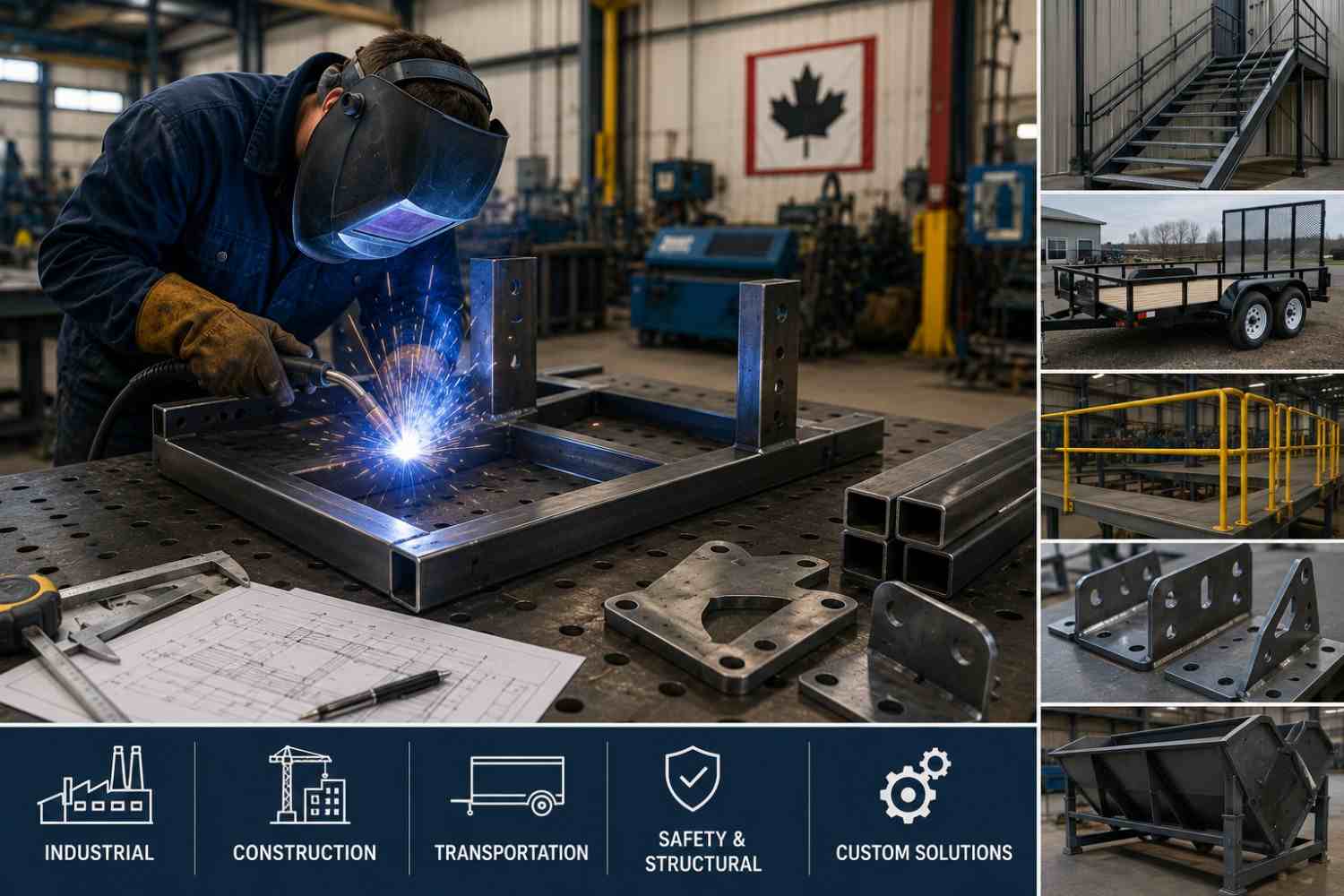
At B&R Stamping, we specialize in delivering precision-engineered solutions tailored to businesses looking for reliable metal stamping in Canada. In this blog, we’ll explore what metal stamping is, why it’s critical in the Canadian market, and how the right partner can transform your production process.


What Is Metal Stamping?

Metal stamping is a manufacturing process that uses dies and
stamping presses to shape flat metal sheets into specific forms. This process
includes a range of techniques such as:

·        Blanking

·        Piercing

·        Bending

·        Coining

·        Embossing

By applying force through specialized tooling, manufacturers can produce complex parts with exceptional accuracy and repeatability—making it ideal for high-volume production across Canada.


Why Metal Stamping Is Important in Canada

1. High Efficiency for Large-Scale Production

Canada’s manufacturing sector demands speed and consistency. Metal stamping enables rapid production runs once tooling is set, making it a cost-effective solution for high-volume needs.

2. Precision and Quality Standards

Canadian industries, especially automotive and aerospace, require tight tolerances and strict quality control. Advanced stamping technology ensures uniformity and reliability across every component.

3. Cost-Effective Manufacturing Solution

Metal stamping minimizes material waste and reduces labor costs. For companies operating in Canada’s competitive market, this translates into better margins and efficient production.

4. Versatility Across Canadian Industries

Metal stamping supports a wide range of materials, including steel, aluminum, copper, and brass—making it suitable for diverse sectors throughout Canada.


Applications of Metal Stamping in Canada

Metal stamping plays a vital role in multiple Canadian industries:

  • ·  Automotive: Structural components, brackets, and body panels
  • ·  Electronics: Connectors, terminals, and shielding parts
  • ·  Industrial Equipment: Precision-engineered machine components

·  Consumer Goods: Durable and high-performance product parts


Choosing the Right Metal Stamping Partner in Canada

Not all providers offer the same level of expertise. When selecting a metal stamping company in Canada, it’s important to consider experience, capabilities, and reliability.


At B&R Stamping, we focus on:

· Custom Solutions: Tailored processes designed for your project needs

· Advanced Tooling: Durable, high-precision dies for consistent output

· Quality Control: Strict inspection standards to meet Canadian industry requirements

· On-Time Delivery: Reliable timelines to support your supply chain


Innovation in the Canadian Metal Stamping Industry

Canada continues to lead in advanced manufacturing through the adoption of:

· Automation and robotics

· Computer-aided design (CAD)

· High-speed precision stamping technologies

These innovations allow manufacturers to produce more complex parts with greater efficiency, reduced waste, and improved accuracy.


B&R Stamping stays at the forefront of these advancements, helping clients stay competitive in the evolving Canadian market.

Metal stamping in Canada is more than just a manufacturing process—it’s a critical foundation for modern industry. From automotive production to electronics manufacturing, precision-stamped components ensure performance, durability, and scalability.

If you’re searching for a trusted partner for metal stamping in Canada, B&R Stamping is ready to support your needs with expertise, quality, and reliability.


Ready to elevate your manufacturing process? Contact B&R Stamping today and discover the difference precision makes.

Frequently Asked Questions

Metal stamping is a manufacturing process that uses dies and high-pressure presses to shape flat metal sheets into specific components. It includes techniques like blanking, bending, piercing, and embossing to produce precise, repeatable parts.

Metal stamping is widely used in industries such as automotive, aerospace, electronics, industrial machinery, and consumer goods, where high-volume and precision components are required.

Common materials include steel, aluminum, copper, and brass. The material selection depends on the application, strength requirements, and environmental conditions.

Metal stamping offers high-speed production, cost efficiency for large volumes, tight tolerances, minimal material waste, and the ability to produce complex shapes with consistency.

Look for a company with proven experience, advanced tooling capabilities, strict quality control, industry certifications, and reliable delivery timelines to ensure consistent results.

Yes, B & R Stamping provides custom metal stamping solutions tailored to your specifications, from design and tooling to full-scale production.