Blog

What Are Earth Anchors? Complete Guide to Ground Anchoring Systems

What Are Earth Anchors?

What Are Earth Anchors? Complete Guide to Ground Anchoring Systems

Ground stability is critical for the safety and performance of structures ranging from mobile homes and portable buildings to retaining walls, utility installations, and major infrastructure projects. One of the most effective solutions used to secure structures and prevent movement is the Earth Anchor System.

Earth anchors, also known as ground anchors, are widely used throughout Canada to provide structural support, resist uplift forces, and improve stability in a variety of soil conditions. Whether you are securing a mobile home, stabilizing a retaining wall, or supporting a construction project, understanding how earth anchors work can help you choose the right anchoring solution.

What Are Earth Anchors?

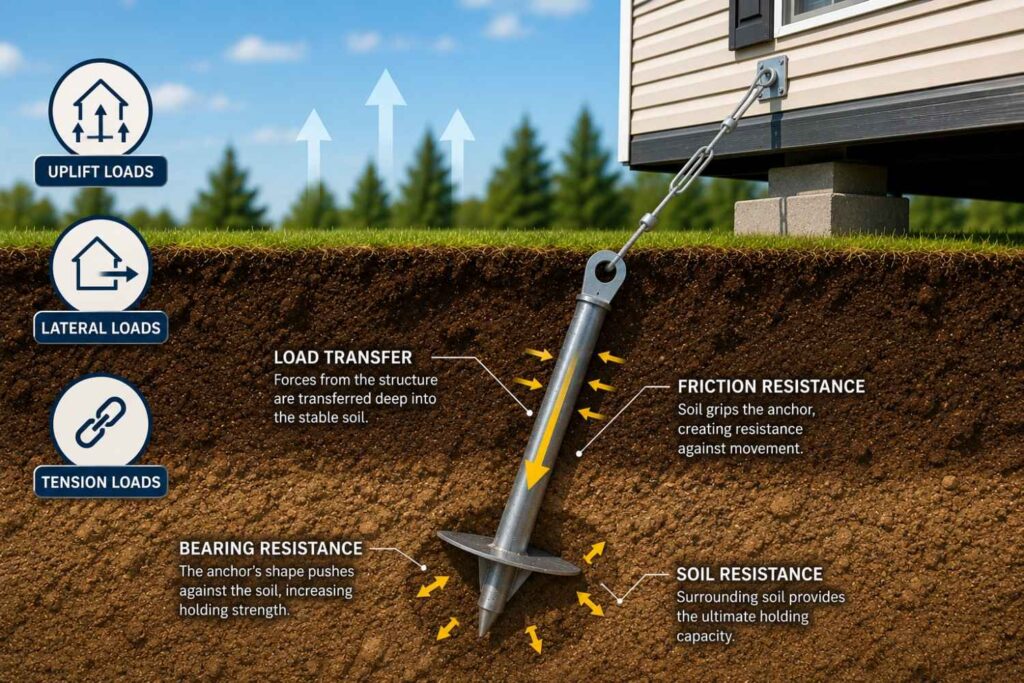
Earth anchors are devices installed below the ground surface to provide resistance against pulling, lifting, or shifting forces. Once installed and activated, the anchor transfers loads into the surrounding soil, creating a secure connection between the structure and the ground.

Unlike traditional concrete foundations, earth anchors can often be installed quickly and cost-effectively while providing excellent holding power. They are commonly manufactured from steel or aluminum and are available in several designs depending on the application and soil conditions.

How Do Earth Anchor Systems Work?

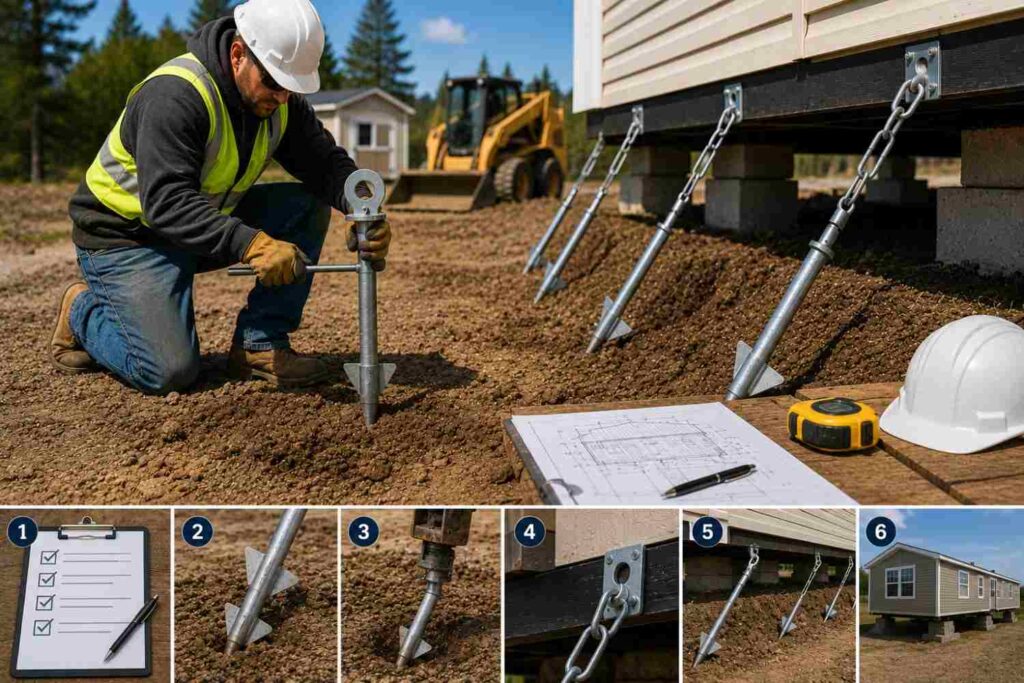
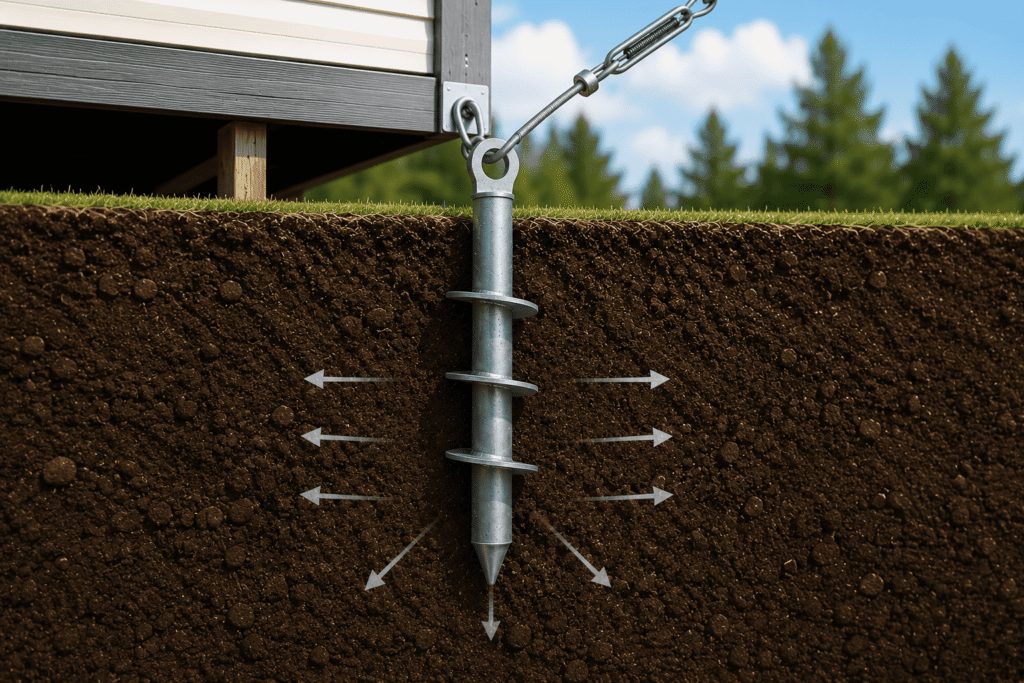
Earth anchor systems work by transferring tension loads into the surrounding soil. After the anchor is driven or installed into the ground, it is activated by applying tension to the cable or rod attached to the anchor.

As tension is applied, the anchor rotates or locks into position beneath the soil surface. Once locked, it engages undisturbed soil and creates resistance against uplift, lateral movement, and structural loads. The deeper the anchor is installed and the stronger the soil conditions, the greater the holding capacity may become.

Types of Earth Anchors

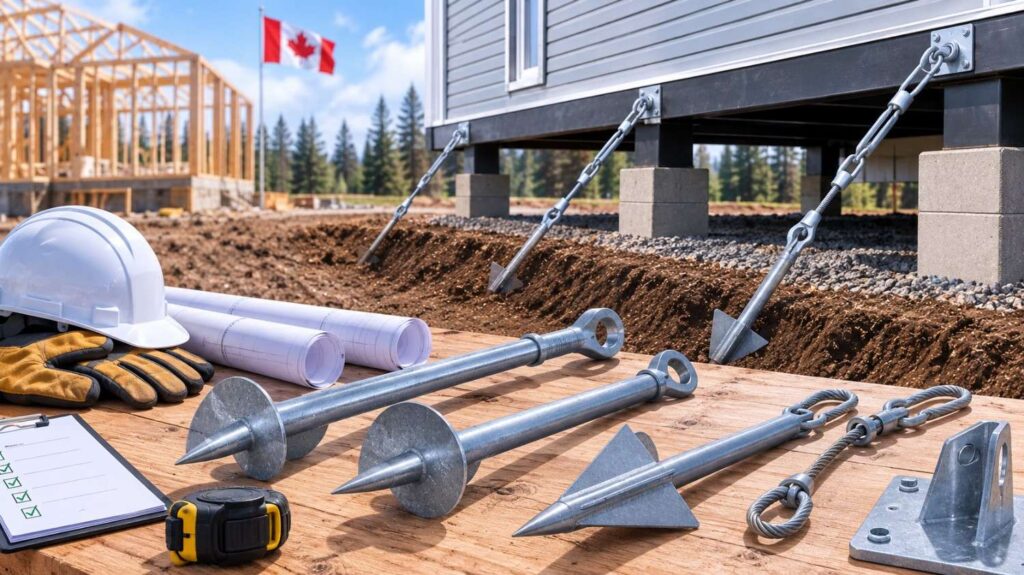
Several types of earth anchors are used depending on project requirements and ground conditions.

Load Lock Anchors

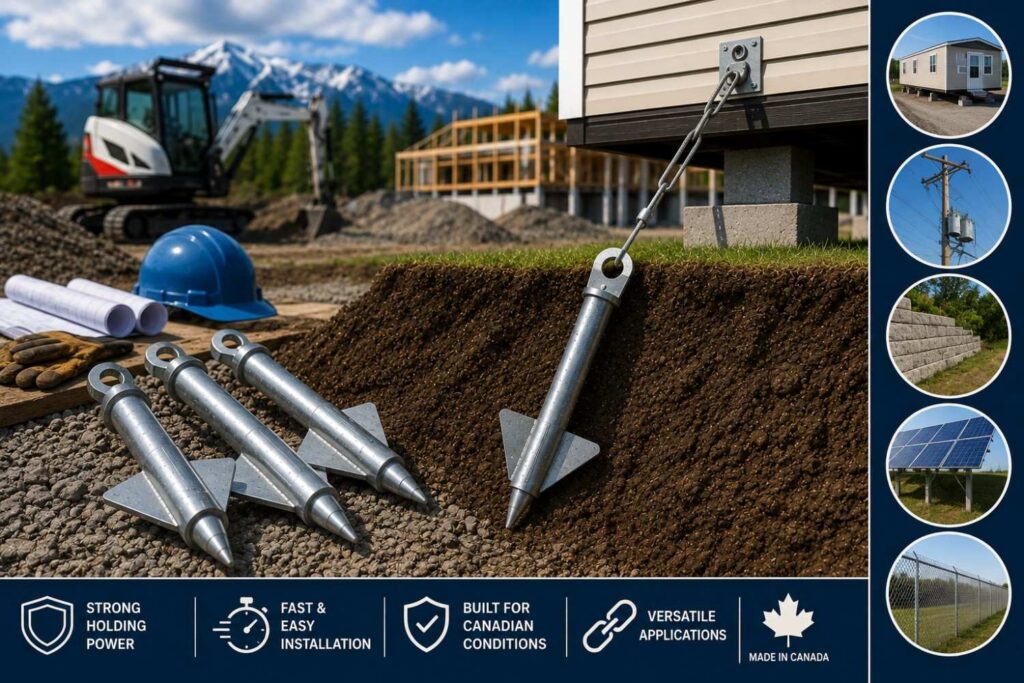
Load Lock Anchors are designed to plane into position beneath the soil surface when tension is applied. These anchors provide exceptional holding strength and are commonly used for mobile homes, portable buildings, utility installations, and construction projects.

Arrowhead Anchors

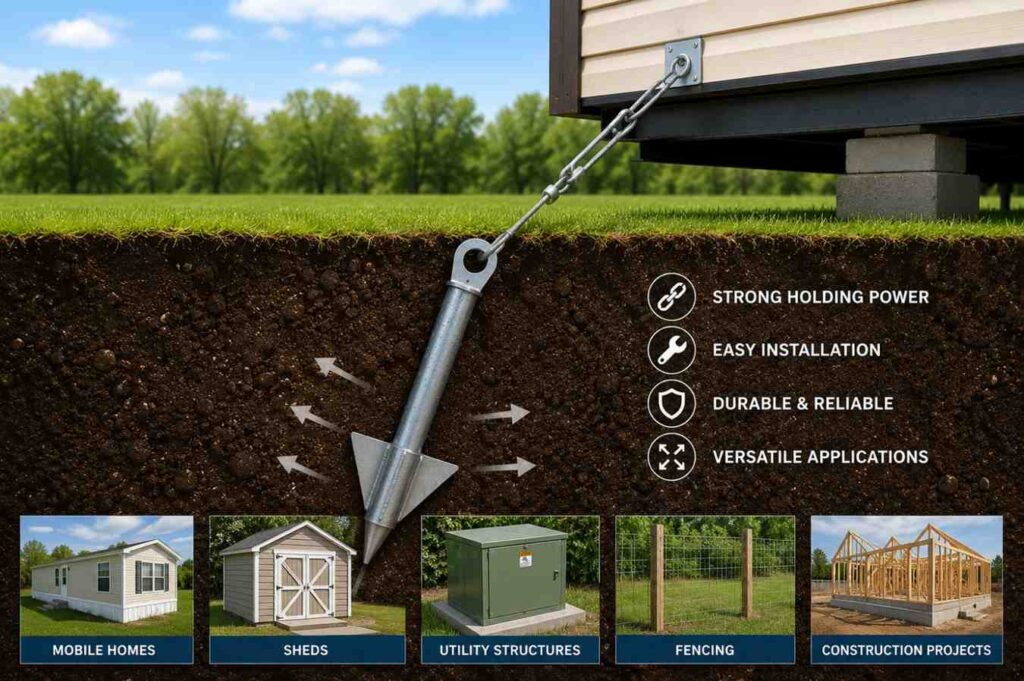
Arrowhead Anchors are manufactured from heavy-duty steel and are designed to provide dependable holding power in various soil conditions. They are widely used for sheds, mobile homes, temporary structures, and utility applications.

Earth Screw Anchors

Earth Screw Anchors feature a helical design that allows them to be screwed into the ground. These anchors are commonly used for foundations, retaining walls, fencing systems, and utility support structures.

Retaining Wall Anchors

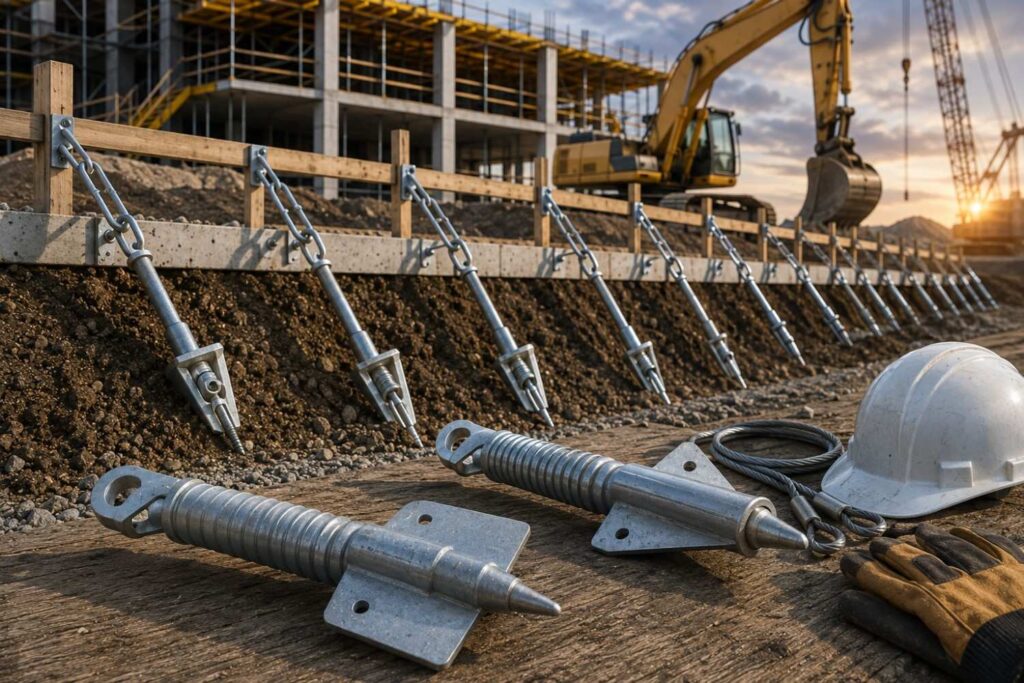
Retaining wall anchors are used to stabilize retaining walls and embankments by transferring loads into stable soil behind the structure. They help prevent wall movement and improve long-term structural stability.

Common Applications of Ground Anchoring Systems

Earth anchor systems are used across many industries and applications.

Construction Projects

Ground anchors provide temporary and permanent stabilization for construction sites, scaffolding systems, excavation support, and structural installations.

Mobile Homes & Modular Buildings

Mobile homes and modular buildings rely on earth anchors to resist uplift forces caused by wind and severe weather conditions.

Retaining Walls & Embankments

Ground anchoring systems provide reinforcement for retaining walls, slopes, and embankments where soil movement may occur.

Utility Installations

Utility poles, telecommunications structures, and electrical installations often use earth anchors for additional stability.

Marine Applications

Boat docks, floating structures, and marine facilities frequently use anchoring systems to maintain position and resist environmental forces.

Benefits of Earth Anchor Systems

Earth anchors offer several advantages compared to traditional support methods.

Strong Holding Power

Modern earth anchor systems are engineered to provide exceptional resistance against uplift and movement.

Cost-Effective Installation

Earth anchors can often be installed more quickly and economically than conventional concrete foundations.

Versatile Applications

They can be used in residential, commercial, industrial, agricultural, and infrastructure projects.

Minimal Site Disruption

Installation generally requires less excavation, reducing disturbance to the surrounding environment.

Long-Term Durability

High-quality earth anchors are designed to withstand harsh environmental conditions while maintaining reliable performance over many years.

Factors That Affect Anchor Performance

Several factors influence the performance of an earth anchor system:

  • Soil classification and density
  • Installation depth
  • Moisture content
  • Anchor design
  • Load requirements
  • Proper installation techniques

Understanding these factors is essential for selecting the correct anchoring solution and achieving maximum holding capacity.

Choosing the Right Earth Anchor System

The best earth anchor system depends on the specific requirements of your project. Factors such as soil conditions, structural loads, environmental exposure, and installation methods should all be considered before selecting an anchor.

Working with an experienced manufacturer can help ensure that the appropriate anchoring system is selected for maximum safety, performance, and long-term reliability.

Why Choose B & R Stamping?

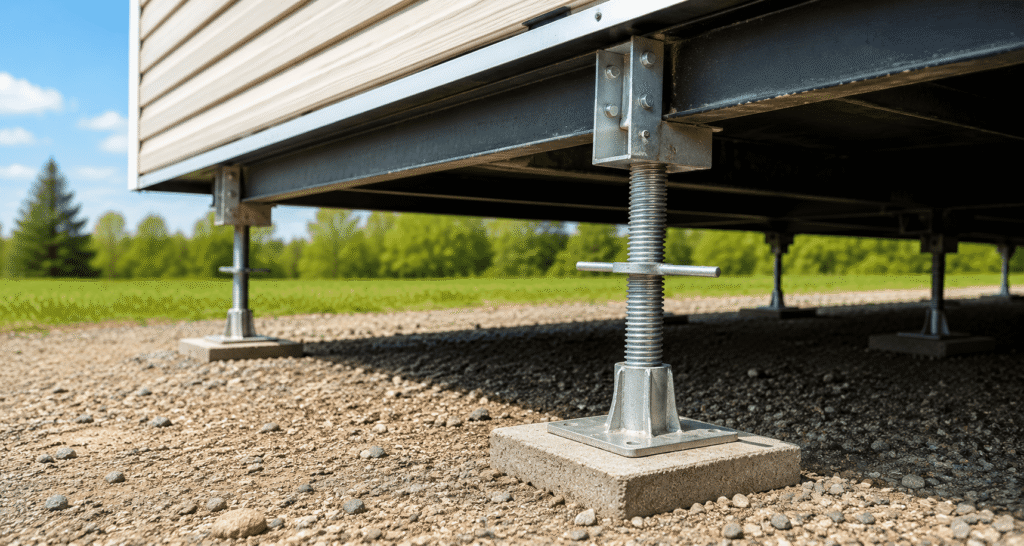
For more than 35 years, B & R Stamping has been manufacturing reliable Earth Anchor Systems, Arrowhead Anchors, Load Lock Anchors, Ground Anchoring Systems, Leveling Jacks, and Structural Support Products for customers across Canada.

Based in Oakville, Ontario, our team provides durable anchoring solutions designed to meet the needs of contractors, builders, engineers, mobile home installers, and industrial organizations. Whether you require standard anchoring products or custom manufacturing solutions, B & R Stamping is committed to delivering quality products and dependable service.

Conclusion

Earth anchors play a critical role in modern construction, infrastructure, utility, and structural support projects. Their ability to provide reliable holding power, improve ground stability, and resist environmental forces makes them one of the most effective anchoring solutions available.

Whether you need anchoring systems for mobile homes, retaining walls, utility installations, or industrial applications, choosing the right earth anchor system is essential for ensuring long-term structural stability and safety.

If you are looking for dependable Earth Anchor Systems in Canada, contact B & R Stamping to learn more about our complete range of anchoring products and custom manufacturing solutions.

Frequently Asked Questions?

Earth Anchors are used to secure structures to the ground and prevent movement caused by wind, soil pressure, vibration, or environmental forces.

Ground Anchors is a broad term used for below-grade anchoring systems, while Earth Anchors are a specific type of ground anchor designed for soil applications.

Earth Anchors can be used in many soil conditions, although performance depends on soil density, moisture content, and installation depth.

Yes. Earth Anchors are commonly used to stabilize retaining walls, embankments, and slope stabilization systems.

When properly installed and maintained, high-quality Earth Anchor Systems can provide reliable performance for many years.

What Are the Benefits of Heavy-Duty Earth Anchors?

Heavy-Duty Earth Anchors

What Are the Benefits of Heavy-Duty Earth Anchors?

Ground stability is one of the most important factors in the success and safety of any construction, infrastructure, industrial, or mobile structure project. Whether securing a mobile home, stabilizing a retaining wall, supporting a utility installation, or protecting a portable building against wind uplift, selecting the right anchoring solution is essential.

Heavy-Duty Earth Anchors provide a reliable and cost-effective method for securing structures and improving long-term stability. Designed to withstand significant loads and challenging environmental conditions, these anchoring systems are widely used throughout Canada in residential, commercial, industrial, and infrastructure applications.

At B & R Stamping, we manufacture high-performance Earth Anchor Systems, Ground Anchoring Systems, Load Lock Anchors, Arrowhead Anchors, Frame Ties, and Structural Support Products designed to provide dependable holding power and structural security.

What Are Heavy-Duty Earth Anchors?

Heavy-Duty Earth Anchors are specialized anchoring devices installed below ground level to secure structures and resist forces that may cause movement, uplift, or instability. Unlike basic anchoring systems, heavy-duty anchors are engineered to provide increased holding strength and long-term durability in demanding applications.

These anchors are commonly used in:

  • Mobile homes and manufactured housing
  • Modular buildings
  • Construction projects
  • Retaining walls
  • Utility installations
  • Scaffolding systems
  • Infrastructure projects
  • Industrial facilities
  • Ground stabilization systems

Once installed and properly activated, the anchor transfers loads into the surrounding soil, creating resistance against external forces and improving structural stability.

Superior Holding Power

One of the biggest advantages of heavy-duty earth anchors is their exceptional holding capacity. These systems are designed to engage undisturbed soil beneath the surface, creating strong resistance against uplift and movement.

Heavy-duty anchors can help secure structures exposed to:

  • High wind loads
  • Soil movement
  • Vibration
  • Environmental stress
  • Structural tension forces

This increased holding power helps improve safety and reduces the risk of structural displacement.

Improved Structural Stability

Structural stability is critical for both temporary and permanent installations. Heavy-duty earth anchors help keep structures securely connected to the ground, reducing movement caused by weather conditions or shifting soil.

Applications that benefit from improved stability include:

  • Mobile homes
  • Portable buildings
  • Utility structures
  • Storage facilities
  • Construction equipment
  • Retaining wall systems

By minimizing movement, these anchors help extend the life of the structure and reduce maintenance requirements.

Reliable Performance in Different Soil Conditions

Heavy-duty earth anchors are designed to perform in a variety of soil conditions, including:

  • Clay
  • Sand
  • Gravel
  • Mixed soils
  • Compact soils

Proper anchor selection and installation allow these systems to provide dependable holding strength even in challenging ground conditions.

For projects involving loose soils or varying ground conditions, specialized anchoring systems such as Load Lock Anchors, Arrowhead Anchors, and X Model Anchors may be recommended.

Cost-Effective Alternative to Traditional Foundations

Many projects require structural support but do not justify the cost and complexity of large concrete foundations.

Heavy-duty earth anchors offer several cost-saving benefits:

  • Reduced excavation requirements
  • Faster installation
  • Lower labor costs
  • Minimal site disruption
  • Less equipment required

For many applications, earth anchors provide a practical and economical alternative while still delivering excellent structural support.

Faster Installation Times

Compared to traditional foundation systems, heavy-duty earth anchors can often be installed quickly and efficiently.

Benefits of faster installation include:

  • Reduced project delays
  • Lower labor expenses
  • Faster project completion
  • Minimal disruption to surrounding areas

This makes earth anchors particularly attractive for temporary structures, modular buildings, utility installations, and mobile home projects.

Long-Term Durability

High-quality earth anchor systems are engineered for long service life and dependable performance.

Features that contribute to durability include:

  • Heavy-duty steel construction
  • Corrosion-resistant materials
  • Galvanized components
  • Durable cable assemblies
  • Weather-resistant designs

These characteristics allow anchors to perform effectively in harsh outdoor environments throughout Canada.

Enhanced Wind Resistance

Strong winds can create uplift forces capable of damaging or displacing structures that are not properly secured.

Heavy-duty earth anchors help protect structures by:

  • Resisting uplift forces
  • Securing buildings to the ground
  • Improving overall structural stability
  • Reducing movement during storms

This is especially important for mobile homes, modular buildings, portable offices, sheds, and temporary structures.

Versatile Applications Across Multiple Industries

One of the reasons heavy-duty earth anchors are so widely used is their versatility.

Common applications include:

Construction Projects

Earth anchors provide stability for temporary and permanent construction structures.

Mobile Homes & Modular Buildings

Anchors help secure structures and comply with anchoring requirements.

Retaining Walls

Anchoring systems help prevent wall movement and improve slope stability.

Utility Installations

Utility poles, telecommunications equipment, and service structures often require anchoring support.

Industrial Facilities

Heavy-duty anchors help stabilize equipment, support structures, and storage systems.

Infrastructure Projects

Roadways, embankments, and public infrastructure projects frequently utilize ground anchoring systems.

Popular Heavy-Duty Earth Anchor Solutions

Load Lock Anchors

Load Lock Anchors are engineered to provide exceptional holding power by rotating and locking beneath the soil surface. Their unique design allows them to engage undisturbed soil and achieve excellent stability.

Arrowhead Anchors

Arrowhead Anchors are manufactured from heavy-gauge steel and provide reliable holding strength for mobile homes, sheds, utility structures, and portable buildings.

X Model Anchors

X Model Anchors are designed for loose heavy rock conditions where traditional earth anchors may not provide sufficient resistance.

Why Choose B & R Stamping?

For more than 35 years, B & R Stamping has manufactured Earth Anchor Systems, Ground Anchoring Systems, Arrowhead Anchors, Load Lock Anchors, Frame Ties, Leveling Jacks, and Structural Support Products for customers throughout Canada.

Our anchoring solutions are trusted by:

  • Contractors
  • Builders
  • Engineers
  • Utility Companies
  • Mobile Home Installers
  • Industrial Manufacturers
  • Infrastructure Developers

We provide reliable products designed to deliver long-term performance and structural stability.

Conclusion

Heavy-Duty Earth Anchors provide a dependable solution for improving structural stability, resisting uplift forces, and securing structures in a variety of soil conditions. Their strong holding power, cost-effective installation, durability, and versatility make them an essential component of many construction, industrial, infrastructure, and mobile structure projects.

Whether you require Load Lock Anchors, Arrowhead Anchors, Ground Anchoring Systems, or custom anchoring solutions, B & R Stamping provides high-quality products designed to meet the demands of Canadian projects.

Frequently Asked Questions?

Heavy-Duty Earth Anchors are used to secure structures, prevent movement, resist uplift forces, and provide ground stabilization for construction, mobile homes, retaining walls, and industrial projects.

Heavy-Duty Earth Anchors are engineered to provide higher holding capacities, increased durability, and improved performance in demanding applications.

Yes. Heavy-Duty Earth Anchors are commonly used to secure mobile homes, modular buildings, and manufactured housing against wind uplift and movement.

Yes. Earth Anchors can perform effectively in clay, sand, gravel, and mixed soil conditions when properly selected and installed.

Load Lock Anchors provide exceptional holding power, easy installation, corrosion resistance, and dependable long-term performance.

Yes. Earth Anchors are frequently used for retaining wall stabilization, embankment reinforcement, and slope control projects.

When properly installed and maintained, high-quality Earth Anchor Systems can provide reliable performance for many years.

Why choose B & R Stamping for Earth Anchor Systems in Canada?

Metal Stamping Canada: Precision Manufacturing for Modern Industries

Metal Stamping Canada: Precision Manufacturing for Modern Industries

In today’s fast-moving manufacturing landscape, precision, efficiency, and scalability are non-negotiable. Across Canada’s industrial sectors, from automotive to consumer electronics, companies rely on consistent, high-quality metal components produced at scale. At the heart of this demand is one essential process: metal stamping.


At B&R Stamping, we specialize in delivering precision-engineered solutions tailored to businesses looking for reliable metal stamping in Canada. In this blog, we’ll explore what metal stamping is, why it’s critical in the Canadian market, and how the right partner can transform your production process.


What Is Metal Stamping?

Metal stamping is a manufacturing process that uses dies and
stamping presses to shape flat metal sheets into specific forms. This process
includes a range of techniques such as:

·        Blanking

·        Piercing

·        Bending

·        Coining

·        Embossing

By applying force through specialized tooling, manufacturers can produce complex parts with exceptional accuracy and repeatability—making it ideal for high-volume production across Canada.


Why Metal Stamping Is Important in Canada

1. High Efficiency for Large-Scale Production

Canada’s manufacturing sector demands speed and consistency. Metal stamping enables rapid production runs once tooling is set, making it a cost-effective solution for high-volume needs.

2. Precision and Quality Standards

Canadian industries, especially automotive and aerospace, require tight tolerances and strict quality control. Advanced stamping technology ensures uniformity and reliability across every component.

3. Cost-Effective Manufacturing Solution

Metal stamping minimizes material waste and reduces labor costs. For companies operating in Canada’s competitive market, this translates into better margins and efficient production.

4. Versatility Across Canadian Industries

Metal stamping supports a wide range of materials, including steel, aluminum, copper, and brass—making it suitable for diverse sectors throughout Canada.


Applications of Metal Stamping in Canada

Metal stamping plays a vital role in multiple Canadian industries:

  • ·  Automotive: Structural components, brackets, and body panels
  • ·  Electronics: Connectors, terminals, and shielding parts
  • ·  Industrial Equipment: Precision-engineered machine components

·  Consumer Goods: Durable and high-performance product parts


Choosing the Right Metal Stamping Partner in Canada

Not all providers offer the same level of expertise. When selecting a metal stamping company in Canada, it’s important to consider experience, capabilities, and reliability.


At B&R Stamping, we focus on:

· Custom Solutions: Tailored processes designed for your project needs

· Advanced Tooling: Durable, high-precision dies for consistent output

· Quality Control: Strict inspection standards to meet Canadian industry requirements

· On-Time Delivery: Reliable timelines to support your supply chain


Innovation in the Canadian Metal Stamping Industry

Canada continues to lead in advanced manufacturing through the adoption of:

· Automation and robotics

· Computer-aided design (CAD)

· High-speed precision stamping technologies

These innovations allow manufacturers to produce more complex parts with greater efficiency, reduced waste, and improved accuracy.


B&R Stamping stays at the forefront of these advancements, helping clients stay competitive in the evolving Canadian market.

Metal stamping in Canada is more than just a manufacturing process—it’s a critical foundation for modern industry. From automotive production to electronics manufacturing, precision-stamped components ensure performance, durability, and scalability.

If you’re searching for a trusted partner for metal stamping in Canada, B&R Stamping is ready to support your needs with expertise, quality, and reliability.


Ready to elevate your manufacturing process? Contact B&R Stamping today and discover the difference precision makes.

Frequently Asked Questions

Metal stamping is a manufacturing process that uses dies and high-pressure presses to shape flat metal sheets into specific components. It includes techniques like blanking, bending, piercing, and embossing to produce precise, repeatable parts.

Metal stamping is widely used in industries such as automotive, aerospace, electronics, industrial machinery, and consumer goods, where high-volume and precision components are required.

Common materials include steel, aluminum, copper, and brass. The material selection depends on the application, strength requirements, and environmental conditions.

Metal stamping offers high-speed production, cost efficiency for large volumes, tight tolerances, minimal material waste, and the ability to produce complex shapes with consistency.

Look for a company with proven experience, advanced tooling capabilities, strict quality control, industry certifications, and reliable delivery timelines to ensure consistent results.

Yes, B & R Stamping provides custom metal stamping solutions tailored to your specifications, from design and tooling to full-scale production.

What Is an Earth Anchor System and How Does It Work?

What Is an Earth Anchor System and How Does It Work?

Introduction to Earth Anchor Systems

In modern construction and civil engineering, stability is one of the most critical factors for long-term structural performance. An earth anchor system has emerged as a reliable solution for supporting structures in challenging soil conditions. Whether used in residential, commercial, or infrastructure projects, these systems provide enhanced safety and durability by anchoring structures deep into the ground. As demand grows globally, especially in regions like Canada, the need for efficient and cost-effective soil stabilization solutions continues to rise.


What Is an Earth Anchor System?

An earth anchor system, also known as a ground anchor system, is a structural support technique used to secure buildings, retaining walls, and other structures by transferring loads into stable soil layers. Unlike traditional foundations, which rely on surface-level support, earth anchors penetrate deeper into the ground to achieve greater stability. These systems consist of key components such as an anchor head, tendon (rod or cable), and anchor body, all working together to resist forces like tension, uplift, and lateral pressure.


How Does an Earth Anchor System Work?

The working mechanism of an earth anchor system is based on load transfer and soil resistance. First, the anchor is installed into the ground using methods such as drilling, screwing (in the case of helical anchors), or driving. Once the anchor reaches a stable soil or rock layer, it is secured in place. When external forces act on the structure—such as wind loads, soil pressure, or structural weight—the anchor transfers these forces through the tendon into the surrounding soil. The soil resists this load through friction and bearing capacity, effectively stabilizing the structure and preventing movement or failure. This efficient load distribution is what makes earth anchoring systems highly effective in construction projects.


Types of Earth Anchor Systems

There are several types of earth anchor systems, each designed for specific conditions and applications. Helical anchors are screw-like devices that can be quickly installed with minimal soil disturbance, making them ideal for light to medium loads. Driven anchors are hammered into the ground and are commonly used for temporary structures. Grouted anchors, also known as tieback anchors, are used in heavy-duty applications such as retaining walls and deep excavations, where high load capacity is required. Additionally, deadman anchors use buried masses like concrete blocks to provide resistance and are often applied in landscaping and erosion control.


Applications of Ground Anchor Systems

Earth anchor systems are widely used across multiple industries due to their versatility and strength. In construction, they are essential for stabilizing retaining walls, securing building foundations, and supporting excavation sites. Infrastructure projects such as bridges, highways, and transmission towers also rely on ground anchors for stability. In renewable energy, these systems are used for solar panel installations, ensuring secure placement even in challenging terrains. Marine structures, docks, and waterfront developments also benefit from earth anchoring solutions, as they help resist water forces and prevent displacement.


Benefits of Using Earth Anchors

One of the major advantages of an earth anchor system is its cost-effectiveness compared to traditional foundation methods. These systems require less excavation and can be installed quickly, reducing labor and construction time. They are also environmentally friendly, as they minimize soil disturbance and can often be reused or removed. Additionally, earth anchors provide high load-bearing capacity and long-term durability, making them suitable for both temporary and permanent structures. Their adaptability to various soil conditions further enhances their value in modern engineering projects.


Limitations and Considerations

Despite their many benefits, earth anchor systems have certain limitations. They may not perform effectively in extremely loose or highly organic soils without additional reinforcement. Proper soil testing and engineering design are essential to ensure optimal performance. Additionally, installation requires specialized equipment and expertise, which can increase initial setup costs. Understanding these factors is crucial for selecting the right anchoring solution for any project.


Earth Anchor Systems in Canada (GEO Optimization Section)

In regions like Canada, where soil conditions and climate vary significantly, earth anchor systems play a crucial role in construction and infrastructure development. Cities such as Toronto, Vancouver, and Calgary often require advanced soil stabilization solutions due to urban expansion and challenging terrains. Businesses looking for earth anchoring solutions in Canada or ground anchor services in Toronto can benefit from professional consulting and engineering expertise to ensure compliance with local regulations and long-term structural safety. As construction demand continues to grow, earth anchors remain a key component of sustainable and efficient building practices in Canada.


Conclusion

An earth anchor system is a powerful and efficient method for stabilizing structures by transferring loads into deeper, more stable soil layers. With applications across construction, infrastructure, and renewable energy, these systems offer a modern alternative to traditional foundations. Their cost-effectiveness, durability, and versatility make them an essential solution for engineers and builders worldwide. By understanding how earth anchors work and where they are best applied, businesses and professionals can make informed decisions for their projects.

Frequently Asked Questions

An earth anchor system is used to stabilize structures such as retaining walls, foundations, and towers by transferring loads into stable soil layers.

Earth anchors work by embedding into the ground and transferring structural loads into surrounding soil, which resists the force through friction and bearing capacity.

Common types include helical anchors, driven anchors, grouted (tieback) anchors, and deadman anchors.

They are used in construction, infrastructure projects, marine structures, solar installations, and slope stabilization.

Yes, they reduce excavation, installation time, and material costs, making them a cost-efficient alternative to traditional foundations.

They work in most soil conditions but may require additional engineering in very loose or organic soils.