
What Are Load Lock Anchors and How Do They Work?
Load Lock Anchors are heavy-duty ground anchoring solutions designed to provide exceptional holding strength for structures that require secure and reliable support. These anchors are commonly used for mobile homes, modular buildings, utility structures, retaining applications, and other projects where stability and resistance against movement are essential.
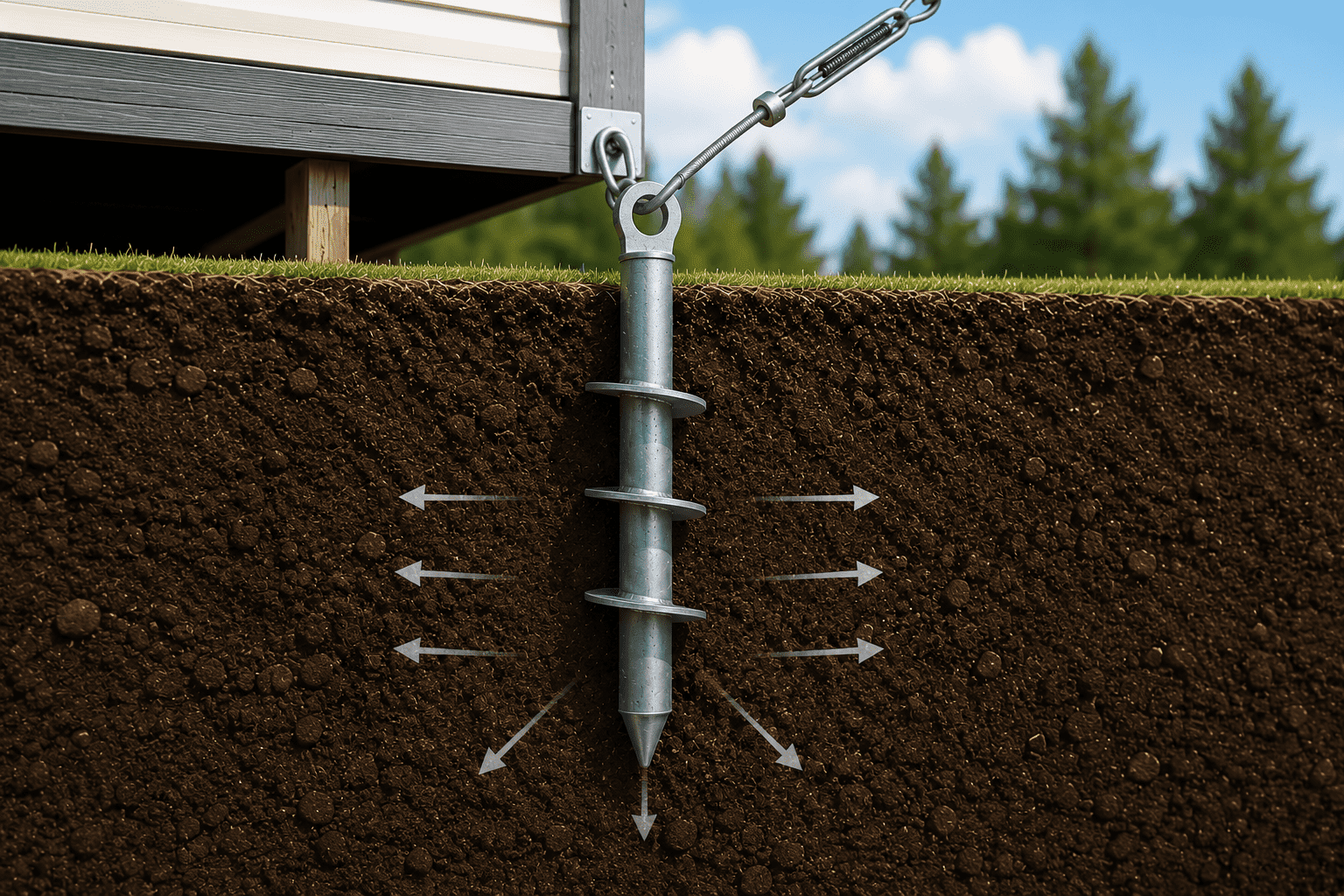
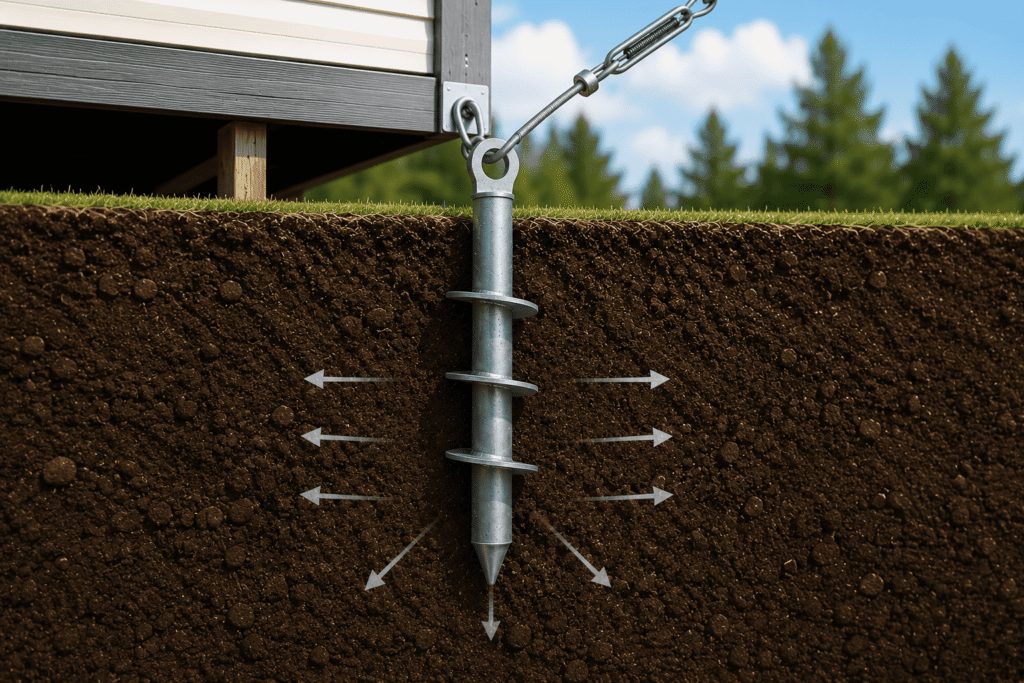
Unlike traditional anchors that rely only on surface contact, Load Lock Anchors are engineered to transfer loads deep into the surrounding soil. This creates strong resistance against uplift, pulling forces, and structural movement.
At B & R Stamping, Load Lock Anchors are manufactured to perform in a wide range of Canadian soil conditions, providing dependable anchoring solutions for residential, commercial, and industrial applications.
How Do Load Lock Anchors Work?
Load Lock Anchors work by creating a secure connection between a structure and the surrounding ground.
The installation process typically includes:
1. Anchor Installation
The Load Lock Anchor is driven or installed into the soil at the required depth. The anchor design allows it to penetrate the ground while maintaining structural strength.
2. Soil Engagement
Once installed, the anchor interacts with the surrounding soil. The soil resistance around the anchor creates holding capacity.
3. Load Transfer
When tension is applied, the anchor transfers the force into the deeper soil layers rather than allowing the structure to move.
4. Long-Term Stability
The combination of anchor design, installation depth, and soil resistance helps maintain stability over time.
Why Choose Load Lock Anchors?
Load Lock Anchors are designed for applications where reliable holding power is required.
Key benefits include:
High Holding Capacity
The anchor design provides strong resistance against pull-out forces and movement.
Reliable Performance in Different Soils
Load Lock Anchors can perform effectively in many soil conditions, including:
- Clay soils
- Compact sand
- Gravel mixtures
- Medium-density soils
Faster Installation
Compared to traditional foundation methods, ground anchoring systems can often be installed faster with less site disruption.
Cost-Effective Solution
Anchoring systems can reduce the need for large concrete foundations while providing dependable structural support.
Applications of Load Lock Anchors
Load Lock Anchors are commonly used for:
Mobile Homes and Manufactured Housing
They help secure mobile homes against wind uplift and ground movement.
Modular Buildings
Provides additional stability for temporary and permanent modular structures.
Utility Installations
Used for supporting poles, equipment, and other utility-related structures.
Retaining and Stabilization Projects
Supports soil stabilization and structural reinforcement applications.
Industrial Applications
Provides anchoring solutions where strong ground connection is required.
Load Lock Anchors vs Traditional Anchoring Systems
Traditional anchoring methods may depend heavily on surface weight or basic attachment points. Load Lock Anchors create resistance by engaging deeper soil layers.
Advantages include:
- Better load distribution
- Improved resistance against uplift
- Less excavation required
- Adaptability to different soil conditions
- Long-term reliability
Load Lock Anchors in Different Soil Conditions
Soil conditions play an important role in anchor performance.
Clay Soil
Dense clay can provide excellent holding strength because of its compact structure. Load Lock Anchors perform well when properly installed in stable clay conditions.
Sandy Soil
Sandy soil may require deeper installation because loose particles provide less resistance compared to dense soil.
Gravel and Mixed Soil
Compacted gravel mixtures can provide strong support, although installation methods may need adjustment depending on rock content.
Soft Soil
Soft soils may require additional anchors, deeper installation, or specialized solutions to achieve the required holding capacity.
Proper soil evaluation helps determine the correct anchoring solution.
How Soil Testing Improves Load Lock Anchor Performance
Before installation, soil testing helps determine:
- Soil density
- Ground resistance
- Installation depth
- Expected holding capacity
- Suitable anchor selection
A proper evaluation helps ensure the Load Lock Anchor System performs safely and effectively.
Why Choose B & R Stamping Load Lock Anchors?
For more than 35 years, B & R Stamping has manufactured Earth Anchors, Load Lock Anchors, Arrowhead Anchors, and Ground Anchoring Systems designed for Canadian conditions.
Our anchoring solutions support:
- Mobile homes
- Modular buildings
- Utility structures
- Construction projects
- Ground stabilization applications
With experience in different soil environments, B & R Stamping helps customers select the right anchoring system for their project needs.
Load Lock Anchors provide a strong and reliable solution for securing structures and resisting movement caused by wind, soil conditions, and external forces. Their ability to transfer loads deep into the ground makes them an effective choice for many residential, commercial, and industrial applications.
Choosing the correct Load Lock Anchor System based on soil conditions and project requirements helps improve safety, stability, and long-term performance.
Recent Posts
- Why Contractors Choose Load Lock Anchoring Systems
- How to Choose the Best Earth Anchor System for Construction Projects in Canada
- Understanding the Anchoring Principle: How Ground Anchors Hold Loads
- What Are Arrowhead Anchors and How Are They Used?
- What Are Leveling Jacks and Why Are They Important?
- What Are Load Lock Anchors and How Do They Work?
- Earth Anchors vs Ground Anchors: Which Solution Is Right for Your Project?
- How Do Earth Anchors Work in Different Soil Conditions?
- What Are Earth Anchors? Complete Guide to Ground Anchoring Systems
Frequently Asked Questions?
A Load Lock Anchor is a heavy-duty ground anchoring system designed to secure structures by transferring loads into surrounding soil for improved stability.
Load Lock Anchors work by engaging with the soil below the surface and creating resistance against pulling forces, uplift, and movement.
They are commonly used for mobile homes, modular buildings, utility structures, construction projects, and stabilization applications.
Load Lock Anchors can work in many soil conditions, but performance depends on soil density, moisture, composition, and installation depth.
Soil testing is recommended because it helps determine the correct anchor type, installation depth, and expected holding capacity.
Load Lock Anchors provide strong holding power by transferring loads deeper into the soil, making them effective for applications requiring reliable stability.