
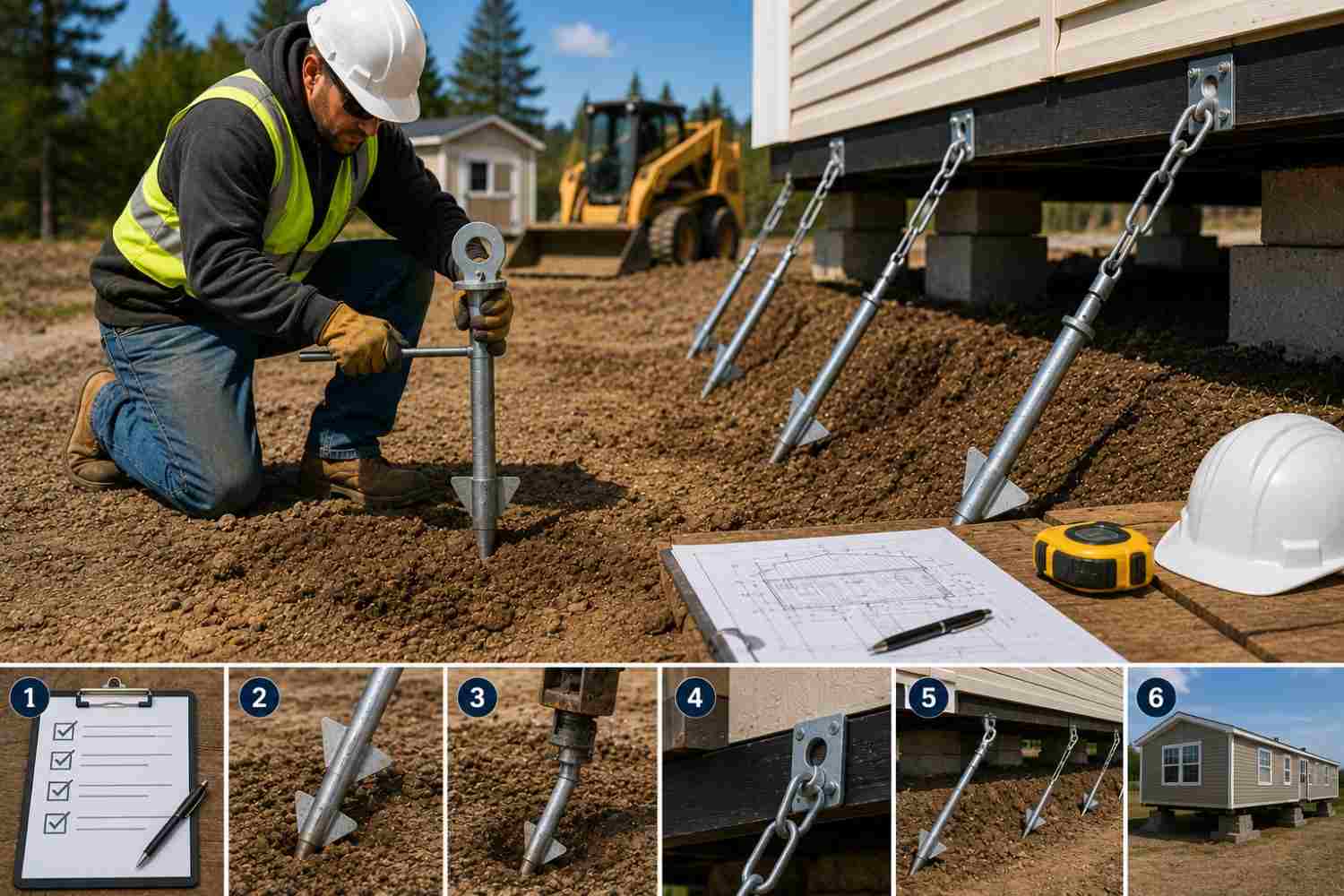
Proper anchor placement and installation are critical to the safety, stability, and long-term performance of any construction project. Even the highest-quality earth anchor system can fail to deliver its full holding capacity if it is installed incorrectly or placed in unsuitable ground conditions. Whether you’re securing modular buildings, retaining walls, utility structures, or temporary installations, following proven installation practices helps ensure reliable structural support and reduces the risk of future movement.
At B & R Stamping, we manufacture high-quality Earth Anchor Systems, Load Lock Anchors, and Arrowhead Earth Anchors that are engineered for dependable performance. However, achieving the best results also depends on selecting the right anchor, evaluating site conditions, and following proper installation techniques.
Start with a Thorough Site Assessment
Every successful installation begins with understanding the job site. Soil conditions, terrain, drainage, and structural load requirements all influence the performance of an anchoring system. Installing anchors without evaluating these factors can result in reduced holding capacity and unnecessary maintenance costs.
Before installation, inspect the site for soil consistency, moisture levels, underground utilities, and any environmental conditions that could affect anchor performance. In areas with mixed or unstable soil, professional soil testing is recommended to determine the most suitable anchor type and installation depth.
Choose the Right Anchor for the Application
Different projects require different anchoring solutions. Selecting an anchor based solely on size or price may not provide the strength needed for the intended application.
When choosing an earth anchor, consider:
- Soil type and density
- Structural load requirements
- Permanent or temporary installation
- Environmental exposure
- Corrosion resistance requirements
Matching the anchor system to the project’s engineering specifications helps improve stability and ensures long-term reliability.
Maintain Proper Anchor Spacing
Anchor placement is just as important as anchor selection. Incorrect spacing can create uneven load distribution, reducing the effectiveness of the entire anchoring system.
The distance between anchors should be determined by the structure’s design, anticipated loads, and engineering recommendations. Proper spacing allows each anchor to share the load evenly while minimizing stress on individual components. Following manufacturer guidelines and project specifications helps achieve the desired level of structural support.
Install Anchors at the Correct Depth
Installation depth has a direct impact on holding capacity. Anchors installed too shallow may not engage stable soil layers, while excessive depth can increase installation time without providing additional benefits.
The correct depth depends on factors such as soil conditions, anchor type, and expected loads. Contractors should always follow manufacturer recommendations and engineering specifications to ensure the anchor reaches its designed load-bearing position.
Verify Anchor Alignment
Proper alignment during installation is essential for achieving maximum performance. Anchors should be installed at the specified angle and orientation so that loads are transferred efficiently into the surrounding soil.
Misaligned anchors may experience uneven stress, reducing holding strength and increasing the risk of structural movement. Taking the time to verify alignment during installation can prevent costly corrections later in the project.
Use Appropriate Installation Equipment
Using the right tools and equipment helps ensure consistent installation quality while reducing the risk of damaging the anchor or surrounding soil.
Professional installation equipment allows contractors to place anchors accurately and efficiently while maintaining the required depth and alignment. Proper equipment also improves productivity, helping projects stay on schedule without compromising safety.
Inspect Every Installation
After installation, each anchor should be inspected to confirm that it has been installed correctly and is ready to support the intended load. Visual inspections and load verification, where applicable, help identify any issues before construction progresses.
Contractors should verify that:
- The anchor is installed at the correct depth.
- Alignment meets project specifications.
- Connection components are securely fastened.
- There is no visible damage to the anchor or hardware.
Routine inspections help improve quality control and provide confidence in the completed installation.
Protect Against Corrosion
Canadian construction projects are often exposed to moisture, snow, road salt, and freeze-thaw cycles that can affect the lifespan of steel components. Selecting anchors with corrosion-resistant finishes helps maintain structural performance over the long term.
Galvanized or specially coated anchors are an excellent choice for projects located in high-moisture or corrosive environments. Regular inspections during the life of the structure can also help identify maintenance needs before significant deterioration occurs.
Follow Manufacturer Guidelines
Every anchoring system is designed with specific installation procedures that help maximize performance. Ignoring manufacturer recommendations can reduce holding capacity and may affect the long-term reliability of the structure.
Working with an experienced manufacturer such as B & R Stamping ensures contractors receive technical guidance, product recommendations, and installation information that supports successful project outcomes.
Common Mistakes to Avoid
Many anchor-related issues can be prevented by avoiding common installation errors. Contractors should take time to plan the installation carefully and verify each step throughout the process.
Some of the most common mistakes include:
- Installing anchors without evaluating soil conditions.
- Choosing the wrong anchor type for the application.
- Incorrect anchor spacing or depth.
- Poor alignment during installation.
- Ignoring corrosion protection requirements.
- Skipping final inspections before loading the structure.
Avoiding these issues helps improve safety, reduce maintenance costs, and extend the service life of the anchoring system.
Why Choose B & R Stamping?
At B & R Stamping, we are committed to providing high-quality anchoring solutions that meet the demands of modern construction projects. Our Earth Anchor Systems, Load Lock Anchors, and Arrowhead Earth Anchors are manufactured using premium materials and strict quality control standards to ensure dependable performance.
In addition to supplying reliable products, our experienced team works with contractors, engineers, and distributors to recommend anchoring solutions that suit specific project requirements and installation conditions.
Proper anchor placement and installation are essential for achieving maximum holding strength, structural stability, and long-term project success. By carefully evaluating site conditions, selecting the appropriate anchor, following recommended installation procedures, and performing routine inspections, contractors can significantly improve the performance and lifespan of their anchoring systems.
Whether you’re working on commercial construction, utility infrastructure, retaining walls, or modular buildings, B & R Stamping offers dependable earth anchoring solutions designed to deliver reliable performance across Canada’s diverse construction environments.
Recent Posts
- Best Practices for Anchor Placement and Installation
- Arrowhead Earth Anchors: Features, Benefits, and Applications
- Why Contractors Choose Load Lock Anchoring Systems
- How to Choose the Best Earth Anchor System for Construction Projects in Canada
- Understanding the Anchoring Principle: How Ground Anchors Hold Loads
- What Are Arrowhead Anchors and How Are They Used?
- What Are Leveling Jacks and Why Are They Important?
- What Are Load Lock Anchors and How Do They Work?
- Earth Anchors vs Ground Anchors: Which Solution Is Right for Your Project?
Frequently Asked Questions?
Proper anchor placement ensures loads are distributed evenly, improving structural stability and maximizing the holding capacity of the anchoring system.
Different soil types provide different levels of holding strength. Soil conditions determine the appropriate anchor type, installation depth, and expected load capacity.
The correct depth depends on the anchor design, soil conditions, and structural load requirements. Always follow manufacturer recommendations and engineering specifications.
Post-installation inspections help confirm correct depth, alignment, secure connections, and overall installation quality before the structure is placed under load.
Using galvanized or corrosion-resistant anchors and performing regular inspections helps protect the anchoring system from moisture, freeze-thaw cycles, and other environmental factors.
B & R Stamping manufactures durable, high-performance Earth Anchor Systems, Load Lock Anchors, and Arrowhead Earth Anchors backed by technical expertise and reliable customer support for construction projects across Canada.