
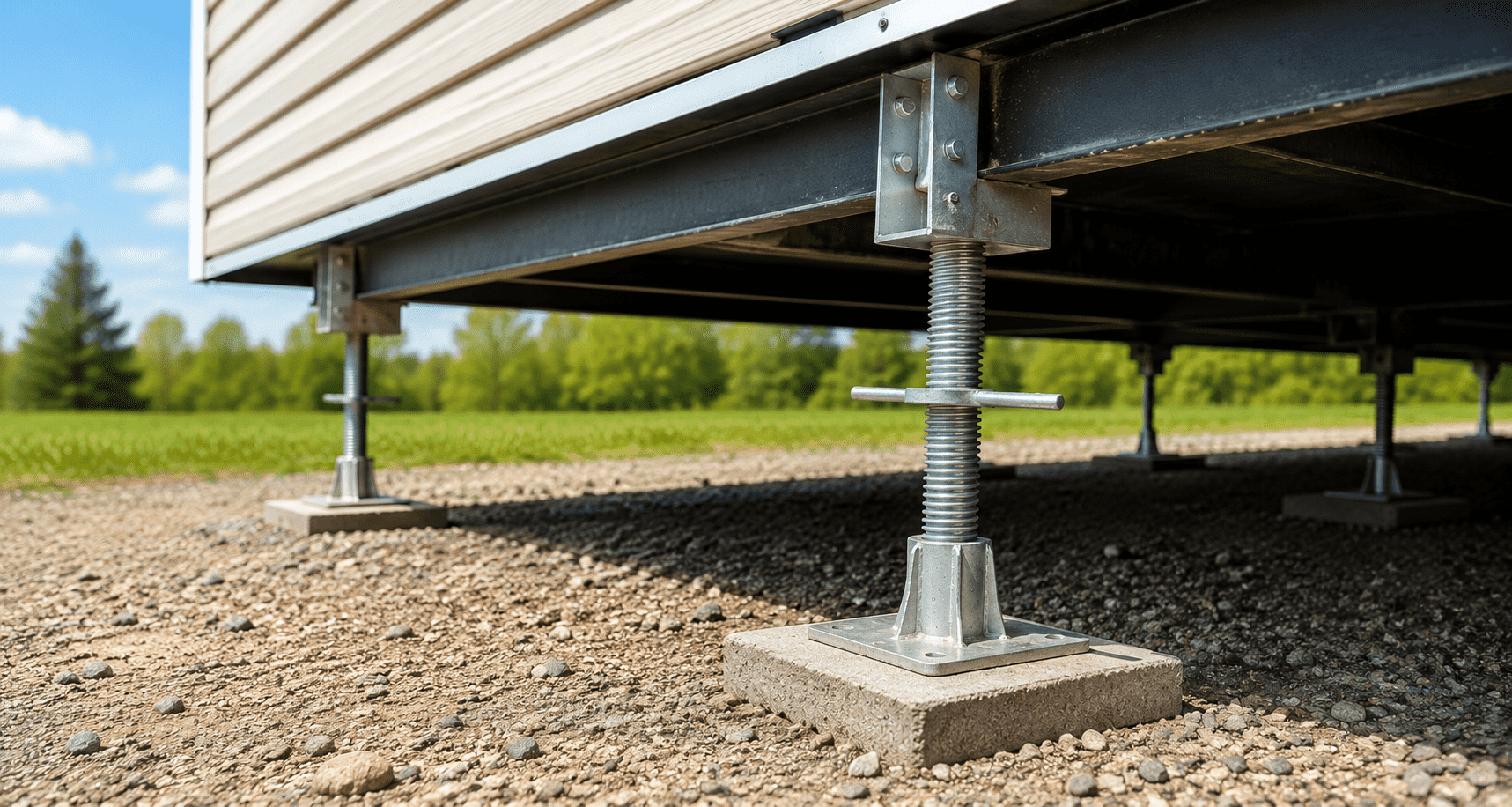
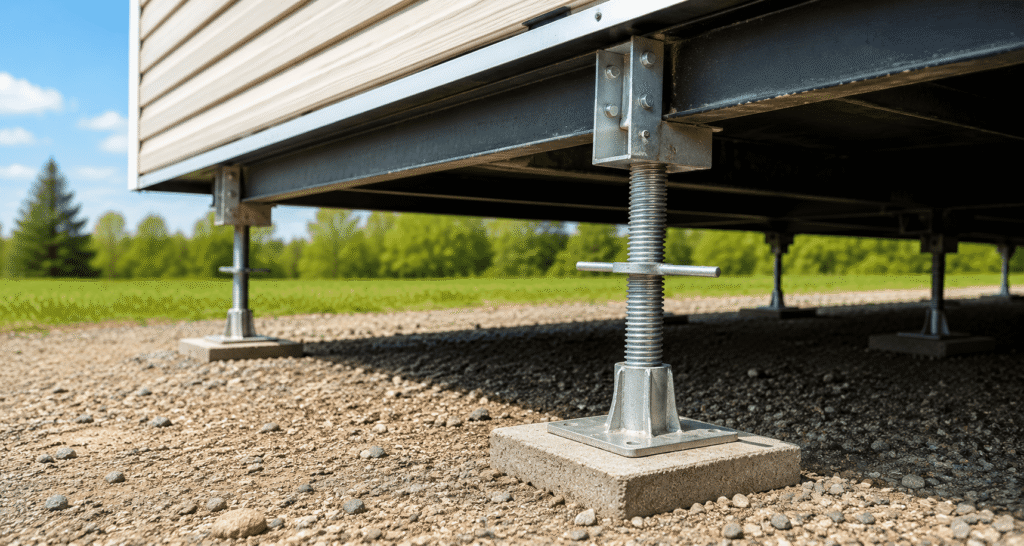
What Are Leveling Jacks and Why Are They Important?
Leveling jacks are support devices designed to adjust, stabilize, and maintain the level position of structures, vehicles, and equipment. They are commonly used for mobile homes, RVs, trailers, modular buildings, and construction applications where proper alignment and stability are essential.
A properly leveled structure helps improve safety, comfort, and long-term performance. Without adequate leveling support, uneven ground conditions can create stress on frames, floors, doors, windows, and structural components.
At B & R Stamping, we manufacture quality anchoring and structural support products designed to provide reliable performance for residential, commercial, and industrial applications.
What Are Leveling Jacks?
Leveling jacks are adjustable mechanical supports that raise, lower, or stabilize a structure to achieve a balanced position.
They typically include:
- Adjustable support components
- Strong steel construction
- Load-bearing contact points
- Adjustment mechanisms for height control
Unlike fixed supports, leveling jacks allow controlled adjustments to compensate for uneven surfaces or ground movement.
How Do Leveling Jacks Work?
Leveling jacks work by applying controlled support force between the structure and the ground.
The process includes:
1. Positioning the Jack
The leveling jack is placed under the designated support point of the structure.
2. Adjusting the Height
The jack is adjusted mechanically to raise or lower the structure until proper alignment is achieved.
3. Supporting the Load
Once adjusted, the jack transfers the weight of the structure safely to the ground.
4. Maintaining Stability
The support helps reduce movement caused by uneven terrain, settling, or environmental conditions.
Why Are Leveling Jacks Important?
Leveling jacks provide several important benefits:
Improved Structural Stability
Uneven surfaces can create stress on a structure. Leveling jacks help distribute loads evenly and maintain balance.
Better Comfort and Function
For mobile homes and RVs, proper leveling helps prevent:
- Uneven floors
- Door alignment issues
- Window problems
- Interior movement
Protection Against Damage
Maintaining proper support reduces strain on:
- Frames
- Foundations
- Structural connections
- Building components
Easy Adjustments
Adjustable leveling systems allow corrections when ground conditions change over time.
Common Applications of Leveling Jacks
Mobile Homes
Mobile home leveling jacks help maintain proper alignment and support after installation.
They help manage issues caused by:
- Soil settlement
- Ground movement
- Seasonal changes
RVs and Trailers
Leveling jacks improve stability and comfort when parked on uneven surfaces.
Modular Buildings
They provide temporary or permanent support during installation and use.
Construction Equipment
Leveling systems help stabilize heavy equipment and structures.
Types of Leveling Jacks
Hydraulic Leveling Jacks
Use hydraulic pressure to provide controlled lifting and support.
Commonly used for:
- RVs
- Heavy equipment
- Industrial applications
Mechanical Leveling Jacks
Use manual adjustment mechanisms for reliable support.
Commonly used for:
- Mobile homes
- Trailers
- Small structures
Adjustable Support Jacks
Designed for applications requiring flexibility in height adjustment.
Leveling Jacks and Soil Conditions
The performance of leveling jacks depends on the ground beneath them.
Important factors include:
- Soil strength
- Ground stability
- Moisture conditions
- Surface preparation
Soft or unstable soils may require additional support solutions to prevent sinking or movement.
How Leveling Jacks Work With Anchoring Systems
Leveling jacks and anchoring systems often work together to provide complete structural support.
While leveling jacks help maintain proper height and alignment, anchors help resist:
- Wind uplift
- Horizontal movement
- Structural shifting
Together, they create a more stable support system for structures such as mobile homes and modular buildings.
Choosing the Right Leveling Jack
The correct leveling jack depends on:
- Structure weight
- Application type
- Required adjustment range
- Ground conditions
- Environmental exposure
Selecting the proper support system helps improve safety and long-term reliability.
Why Choose B & R Stamping?
For more than 35 years, B & R Stamping has manufactured reliable structural support products including:
- Earth Anchors
- Load Lock Anchors
- Arrowhead Anchors
- Ground Anchoring Systems
- Support Components
Our products are designed to support Canadian construction and anchoring requirements across residential, commercial, and industrial projects.
Leveling jacks are an essential component for maintaining stability, alignment, and safety in many structures and equipment applications. By allowing controlled height adjustments and providing reliable support, they help protect structures from uneven ground conditions and movement.
Whether used for mobile homes, RVs, trailers, or modular structures, choosing the right leveling jack system ensures better performance and long-term stability.
Recent Posts
- Why Contractors Choose Load Lock Anchoring Systems
- How to Choose the Best Earth Anchor System for Construction Projects in Canada
- Understanding the Anchoring Principle: How Ground Anchors Hold Loads
- What Are Arrowhead Anchors and How Are They Used?
- What Are Leveling Jacks and Why Are They Important?
- What Are Load Lock Anchors and How Do They Work?
- Earth Anchors vs Ground Anchors: Which Solution Is Right for Your Project?
- How Do Earth Anchors Work in Different Soil Conditions?
- What Are Earth Anchors? Complete Guide to Ground Anchoring Systems
Frequently Asked Questions?
Leveling jacks are used to adjust height, stabilize structures, and maintain proper alignment on uneven surfaces.
Yes. Leveling jacks help maintain mobile home stability and reduce stress caused by uneven ground or settling.
They distribute structural loads evenly and provide adjustable support between the structure and the ground.
Yes, leveling jacks are designed to compensate for uneven surfaces when properly installed.
No. Leveling jacks provide support and adjustment, while anchors help secure structures against movement and uplift.
Inspection frequency depends on the structure, soil conditions, and environmental factors, but regular checks help maintain safe performance.