
How Do Earth Anchors Work in Different Soil Conditions?
Earth anchors are one of the most effective solutions for securing structures, stabilizing retaining walls, supporting utility installations, and protecting mobile homes from wind uplift. However, the performance of an Earth Anchor System depends heavily on one critical factor: soil conditions.
Different soil types provide different levels of resistance and holding strength. Understanding how earth anchors perform in various soil conditions helps contractors, engineers, and property owners select the right Ground Anchoring System for maximum stability and long-term performance.
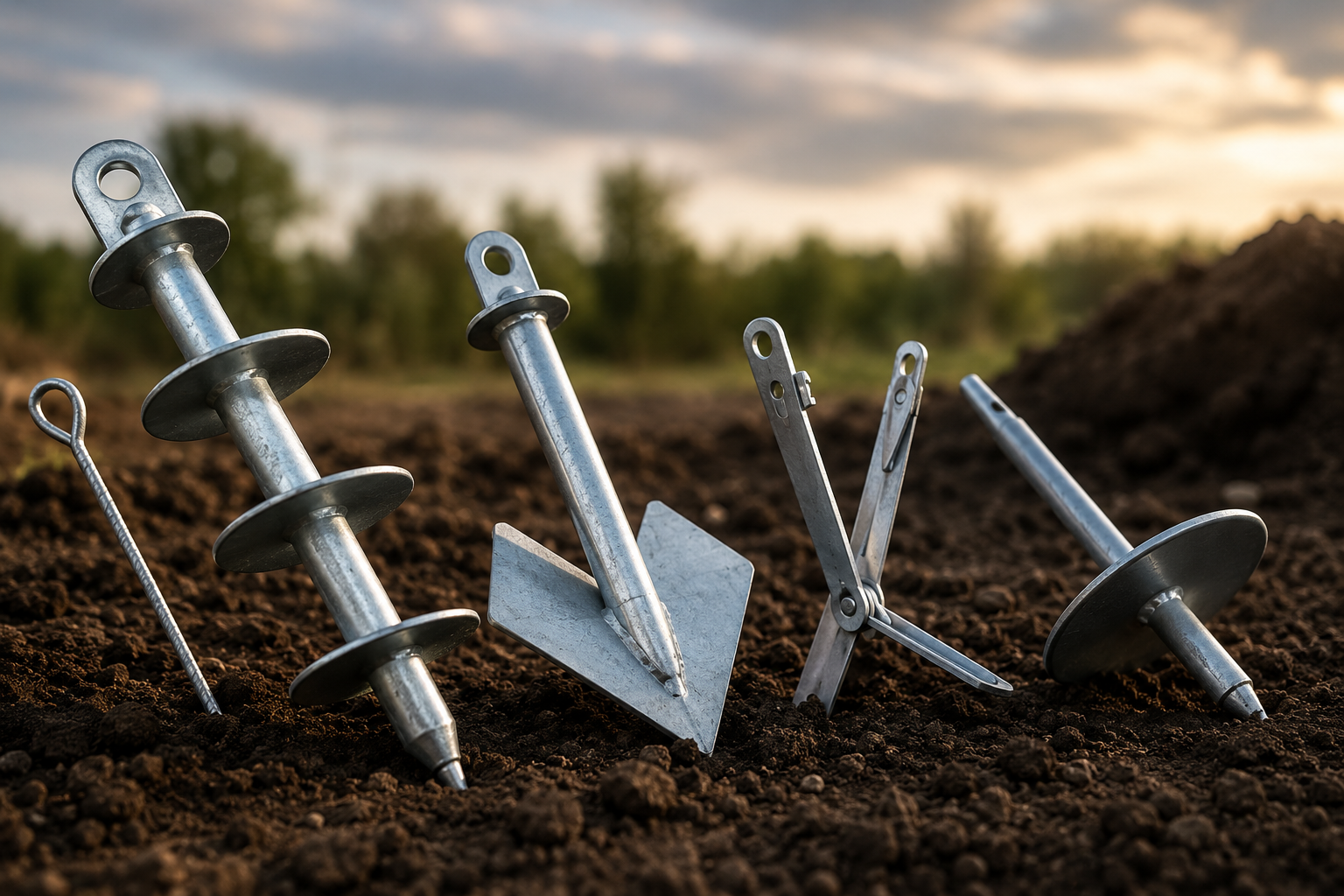
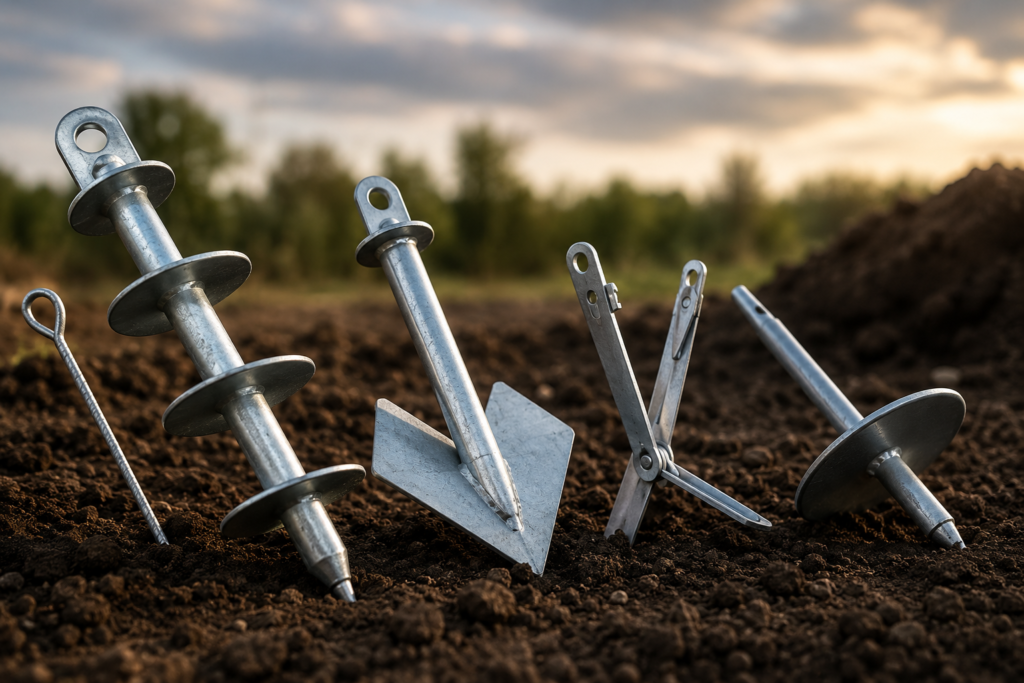
At B & R Stamping, we manufacture Earth Anchors, Load Lock Anchors, Arrowhead Anchors, and Ground Anchoring Systems designed to perform in a wide range of Canadian soil conditions.
Why Soil Conditions Matter for Earth Anchors
Earth anchors work by transferring loads into the surrounding soil. Once installed and activated, the anchor engages undisturbed soil beneath the surface, creating resistance against uplift, movement, and structural loads.
The denser and more stable the soil, the greater the anchor’s holding capacity. Softer soils may require deeper installation, larger anchors, or additional anchoring points to achieve the desired holding strength.
Factors that influence anchor performance include:
- Soil density
- Soil moisture content
- Soil composition
- Installation depth
- Groundwater conditions
- Environmental factors
Proper soil evaluation is essential before installing any Earth Anchor System.
Earth Anchors in Clay Soils
Clay soils are among the most common soil types used with ground anchoring systems. Dense clay provides excellent resistance and can generate strong holding capacity when anchors are properly installed.
Benefits of Clay Soils:
- High soil density
- Strong resistance to uplift
- Good long-term stability
- Excellent load-bearing characteristics
Challenges:
- Extremely hard clay may make installation more difficult.
- Clay can expand and contract with moisture changes.
- Frozen clay conditions may affect installation depth.
Load Lock Anchors and Arrowhead Anchors often perform exceptionally well in medium to dense clay conditions.
Earth Anchors in Sandy Soils
Sand provides less resistance than clay because individual particles do not bond together as tightly. However, properly installed Earth Anchors can still provide excellent performance in sandy environments.
Benefits of Sandy Soils:
- Easier installation
- Good drainage
- Reduced frost-related movement
Challenges:
- Lower holding capacity compared to dense clay
- May require deeper installation
- Loose sand can reduce anchor resistance
In sandy soils, anchor depth becomes particularly important to maximize holding strength and structural stability.
Earth Anchors in Gravel & Mixed Soils
Gravel and mixed soil conditions can provide excellent holding power when properly compacted. Many construction and infrastructure projects encounter gravel, sand, and clay mixtures.
Benefits of Gravel Soils:
- Strong load-bearing characteristics
- Good drainage
- Stable support conditions
Challenges:
- Large rocks may interfere with installation
- Installation depth may vary
- Soil consistency may differ across the site
Ground Anchoring Systems designed for mixed soils can provide reliable performance when soil conditions are properly evaluated before installation.
Earth Anchors in Rocky Soil Conditions
Rocky ground presents unique installation challenges. Standard Earth Anchors may encounter difficulties penetrating heavy rock formations or bedrock.
In these conditions, specialized solutions such as:
- X Model Anchors
- Expansion Anchors
- Rock Anchors
- Custom Ground Anchoring Systems
may be required.
B & R Stamping’s X Model Anchor is specifically designed for loose heavy rock conditions where traditional earth anchors may not provide adequate performance.
Benefits:
- High resistance levels
- Excellent long-term stability
Challenges:
- Difficult installation
- May require specialized anchoring systems
- Increased installation time
Earth Anchors in Soft Soil Conditions
Soft soils include:
- Wet clay
- Silt
- Fill material
- Organic soils
- Marsh conditions
These soils typically provide the lowest holding capacity and often require special consideration during anchor design and installation.
Challenges include:
- Reduced soil resistance
- Lower holding strength
- Increased installation depth requirements
- Greater susceptibility to movement
In softer soils, additional anchors or larger anchoring systems may be required to achieve desired load capacities.
Understanding Soil Classifications
Anchor performance is often evaluated using soil classifications.
Typical classifications include:
Class 1 Soil
Solid bedrock and concrete surfaces.
Class 2 Soil
Dense clay, compact gravel, sandstone, and laminated rock.
Class 3 Soil
Shale, hardpan, and compact clay-gravel mixtures.
Class 4 Soil
Gravel, claypan, and compact sand mixtures.
Class 5 Soil
Medium clay, loose gravel, and compact coarse sand.
Class 6 Soil
Soft clay, loose coarse sand, and clay-silt mixtures.
Class 7 Soil
Fill material, wet clay, and loose fine sand.
Class 8 Soil
Swamp conditions, saturated silt, and organic soils.
The soil classification helps determine the correct anchor type, installation depth, and expected holding capacity.
How Soil Testing Improves Anchor Performance
Before installing Earth Anchor Systems, soil testing helps determine:
- Soil consistency
- Density
- Moisture content
- Load-bearing capacity
- Installation depth requirements
One common method is using a torque probe, which measures underground soil resistance and helps determine the most suitable anchoring solution for the site.
Proper soil testing helps maximize holding power and reduce installation risks.
Choosing the Right Earth Anchor for Your Soil Conditions
Different projects require different anchoring solutions.
Load Lock Anchors
Ideal for medium-density soils and applications requiring high holding power.
Arrowhead Anchors
Suitable for mobile homes, sheds, utility structures, and general anchoring applications.
X Model Anchors
Designed specifically for loose heavy rock conditions.
Embankment Control Anchors
Used for retaining walls, slope stabilization, and infrastructure projects.
Selecting the correct anchor system based on soil conditions helps improve safety, structural stability, and long-term performance.
Why Contractors Trust B & R Stamping
For more than 35 years, B & R Stamping has manufactured Earth Anchor Systems, Ground Anchoring Systems, Load Lock Anchors, Arrowhead Anchors, Frame Ties, and Structural Support Products for customers across Canada.
Our experience with Canadian soil conditions allows us to provide anchoring solutions designed for:
- Mobile Homes
- Modular Buildings
- Retaining Walls
- Infrastructure Projects
- Utility Installations
- Industrial Facilities
- Ground Stabilization Systems
We help customers select the right anchoring solution for their specific project requirements and soil conditions.
Conclusion
Earth anchors can provide exceptional holding power and structural stability, but their effectiveness depends heavily on soil conditions. Understanding how anchors perform in clay, sand, gravel, rock, and soft soils helps ensure proper installation and long-term performance.
Whether you are securing a mobile home, stabilizing a retaining wall, or supporting an infrastructure project, choosing the correct Earth Anchor System for your soil conditions is essential for safety and reliability.
B & R Stamping manufactures high-quality Earth Anchors, Load Lock Anchors, Arrowhead Anchors, and Ground Anchoring Systems designed to perform in a wide range of soil environments across Canada.
Recent Posts
- Why Contractors Choose Load Lock Anchoring Systems
- How to Choose the Best Earth Anchor System for Construction Projects in Canada
- Understanding the Anchoring Principle: How Ground Anchors Hold Loads
- What Are Arrowhead Anchors and How Are They Used?
- What Are Leveling Jacks and Why Are They Important?
- What Are Load Lock Anchors and How Do They Work?
- Earth Anchors vs Ground Anchors: Which Solution Is Right for Your Project?
- How Do Earth Anchors Work in Different Soil Conditions?
- What Are Earth Anchors? Complete Guide to Ground Anchoring Systems
Frequently Asked Questions?
Dense clay and well-compacted gravel soils generally provide the highest holding capacities because they offer strong resistance against anchor movement.
Yes. Earth Anchors can be installed in sandy soil, although deeper installation may be required to achieve maximum holding strength.
X Model Anchors and Expansion Anchors are often used in rocky conditions where standard earth anchors may not perform effectively.
Soil testing helps determine soil strength, density, and installation depth requirements, ensuring maximum anchor performance.
Yes. Soft soils typically provide lower resistance and may require deeper installation or additional anchoring systems to achieve required holding capacities.