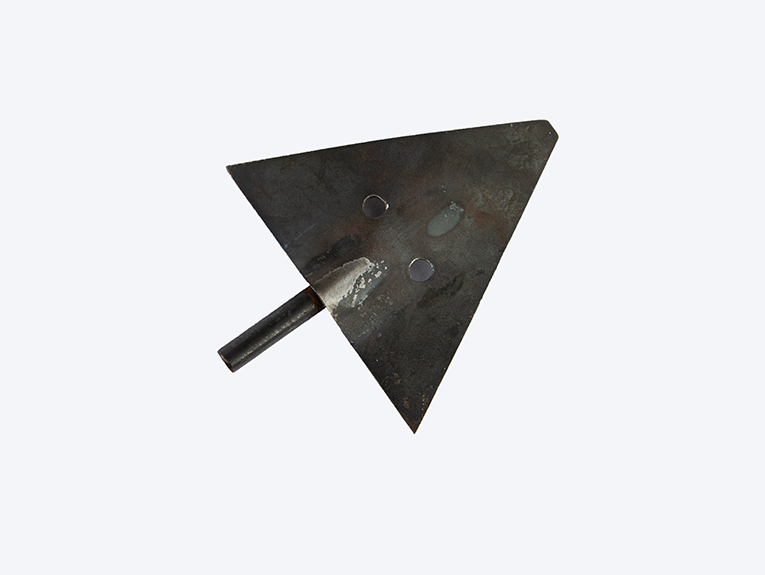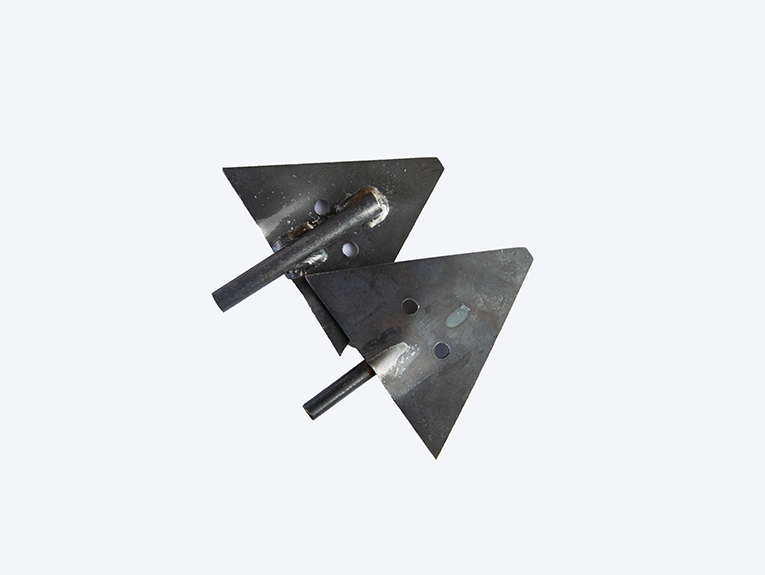
Arrowhead Anchor Manufactured
The Arrowhead Anchor by B & R Stamping is designed to provide strong and reliable ground anchoring for a variety of structural applications. These anchors are commonly used where dependable holding power is required to secure portable buildings, mobile homes, and other structures that need protection from movement caused by wind or soil conditions.
Manufactured from heavy gauge steel, the Arrowhead Anchor is built for durability and long-term performance in outdoor environments. Its solid steel construction allows it to withstand demanding ground conditions while maintaining strong anchoring capacity.
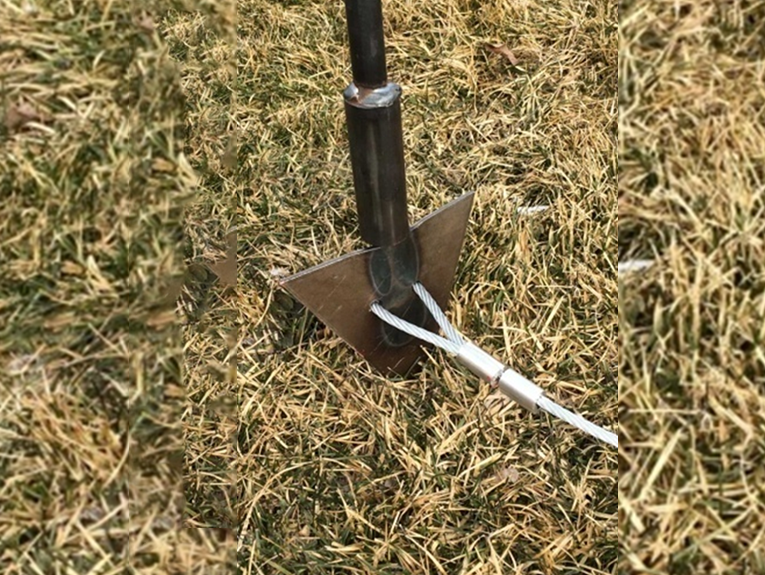
The standard Arrowhead Anchor includes a 1/4 inch diameter galvanized steel cable, which provides corrosion resistance and dependable strength. The overall length of the anchor system, including the galvanized cable, is 48 inches, allowing the anchor to be installed at a suitable depth for improved stability and holding power.
Arrowhead Anchors are widely used in ground anchoring systems where structural stability and reliable soil resistance are essential. Their durable construction and simple installation make them a practical solution for contractors, builders, and property owners who require dependable anchoring systems.
Applications of Arrowhead Anchors
Arrowhead Anchors can be used in a wide range of applications where structures need to be secured to the ground. These anchors are commonly used for portable buildings, mobile homes, scaffolding systems, temporary structures, fences, and other installations that require strong ground stabilization.
Frequently Asked Questions (FAQ)
An Arrowhead Anchor is used to secure structures to the ground, helping prevent movement caused by wind forces, soil pressure, or environmental conditions.
The Arrowhead Anchor is manufactured from heavy gauge steel, which provides strength, durability, and reliable anchoring performance.
The standard Arrowhead Anchor includes a 1/4 inch diameter galvanized steel cable with a total length of 48 inches.
Galvanized steel cable provides corrosion resistance and long-term durability, making the anchor suitable for outdoor installations and varying weather conditions.
Arrowhead Anchors are commonly used for portable buildings, mobile homes, fences, scaffolding, temporary structures, and other applications requiring ground anchoring.